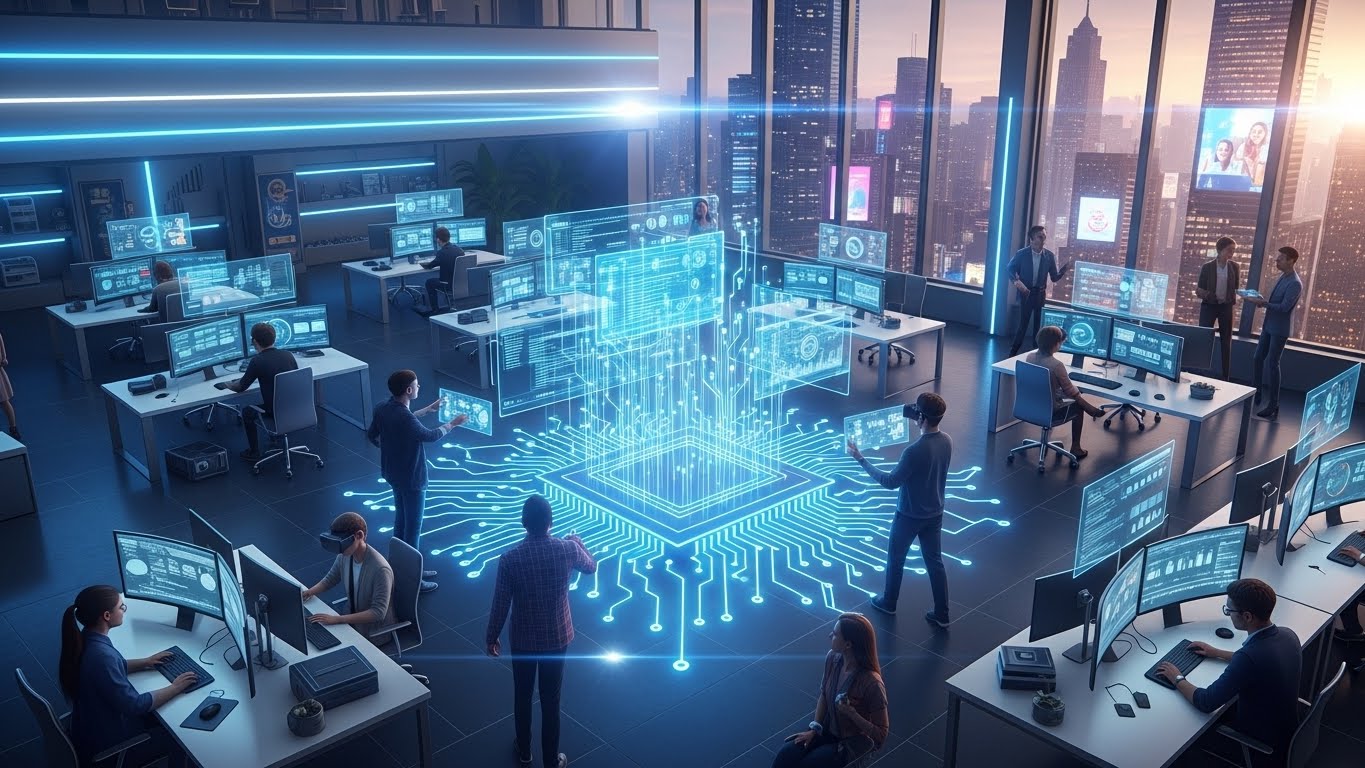

Technology has become the backbone of modern society, influencing the way we live, work, communicate, and even think. From the invention of the wheel to artificial intelligence and quantum computing, technological advancements have continuously reshaped human civilization. Today, we are witnessing a digital revolution that is transforming industries, economies, and daily life at an unprecedented pace. In this blog, we explore the evolution of technology, its impact on society, its role in education and business, the ethical challenges it presents, and what the future holds for humanity in an increasingly digital world.
The Evolution of Technology
The story of technology begins with human innovation. Early humans developed tools for hunting, farming, and construction, gradually advancing to complex machines and systems. The Industrial Revolution marked a major turning point, introducing mechanization, mass production, and advances in transportation and communication.
The 20th century brought about the digital revolution, beginning with computers and electronics. The invention of the internet in the late 20th century connected people globally, transforming communication, commerce, and information access. In the 21st century, technology has evolved at an accelerated rate, with breakthroughs in artificial intelligence, robotics, biotechnology, and renewable energy reshaping every aspect of human life.
Technology in Everyday Life
Technology permeates our daily lives in ways that were unimaginable a few decades ago. Smartphones, wearable devices, and smart home systems provide instant access to information, entertainment, and communication. From GPS navigation to online banking, technology simplifies routine tasks and increases efficiency.
Social media platforms and messaging apps have revolutionized the way people interact, allowing for instant global communication. At the same time, streaming services, virtual assistants, and online marketplaces have transformed entertainment and commerce. Technology has become not only a tool but an integral part of human existence, shaping how we live, learn, and connect.
Impact on Communication
One of the most profound effects of technology is its impact on communication. The internet, smartphones, and social media platforms have made it possible for people to connect instantly, regardless of distance. Email, video conferencing, and messaging apps have redefined personal and professional communication.
This instant connectivity has created global communities, allowing people to collaborate, share ideas, and participate in social movements like never before. However, it also presents challenges, such as information overload, digital addiction, and the spread of misinformation. Balancing the benefits and drawbacks of digital communication is a critical consideration in today’s connected world.
Technology in Education
Technology has revolutionized education, providing new tools and methods for learning. Online platforms, digital textbooks, and interactive applications make knowledge more accessible than ever. Students can attend virtual classes, access global resources, and collaborate with peers worldwide.
Artificial intelligence and adaptive learning systems are transforming traditional classrooms by personalizing education to individual needs. Virtual and augmented reality technologies provide immersive learning experiences, making complex subjects easier to understand. Technology is bridging educational gaps, promoting lifelong learning, and preparing students for careers in a rapidly changing world.
The Role of Technology in Healthcare
Healthcare has been profoundly transformed by technology. Advanced diagnostic tools, electronic medical records, telemedicine, and wearable health monitors improve patient care and accessibility. AI-powered systems can analyze medical data, assist in diagnosing diseases, and even predict potential health risks.
Robotics and minimally invasive surgical tools have enhanced precision and reduced recovery times for patients. Biotechnology innovations, including genetic research and personalized medicine, are revolutionizing treatment methods. Technology in healthcare not only improves outcomes but also makes medical services more efficient, accessible, and patient-centered.
Technology in Business and Industry
Businesses and industries have undergone a major transformation due to technology. Automation, artificial intelligence, and big data analytics allow companies to optimize operations, reduce costs, and make data-driven decisions. E-commerce platforms and digital marketing have reshaped how products and services are bought, sold, and promoted.
Supply chain management, logistics, and inventory systems have become more efficient through advanced software and IoT-enabled devices. Startups and entrepreneurs leverage technology to innovate, disrupt traditional markets, and create entirely new industries. Technology has become the engine driving economic growth, competition, and innovation on a global scale.
Artificial Intelligence and Machine Learning
Artificial intelligence (AI) and machine learning are at the forefront of technological innovation. AI systems can analyze massive datasets, recognize patterns, and perform tasks that were once considered exclusive to human intelligence. Applications range from autonomous vehicles and predictive analytics to natural language processing and robotics.
Machine learning algorithms allow systems to continuously improve by learning from data, enabling more accurate predictions, personalized recommendations, and automation of complex tasks. AI has the potential to revolutionize multiple sectors, including finance, healthcare, education, and manufacturing, but it also raises ethical and societal concerns that must be addressed.
Technology and the Environment
Technology has both positive and negative impacts on the environment. On one hand, innovations in renewable energy, electric vehicles, smart grids, and sustainable agriculture contribute to environmental conservation and reduce carbon footprints. Advanced monitoring systems help track pollution, deforestation, and climate change, enabling proactive solutions.
On the other hand, electronic waste, energy consumption, and resource-intensive manufacturing processes pose environmental challenges. Balancing technological advancement with environmental responsibility is crucial to ensure a sustainable future for the planet and future generations.
Ethical Challenges in Technology
As technology evolves, ethical concerns become increasingly important. Privacy, data security, and surveillance are pressing issues in a connected world. The collection and use of personal data by corporations and governments raise questions about consent, transparency, and control.
AI and automation also pose ethical dilemmas, including bias in algorithms, job displacement, and decision-making accountability. Cybersecurity threats, digital addiction, and misinformation further complicate the ethical landscape. Responsible innovation, regulation, and awareness are essential to harness technology’s benefits while minimizing risks.
The Future of Technology
The future of technology promises even greater transformation. Emerging fields like quantum computing, biotechnology, advanced robotics, and space exploration hold the potential to redefine the limits of human capability. AI-driven systems will become more sophisticated, assisting in decision-making and creative processes across industries.
The integration of virtual and augmented reality will reshape entertainment, education, and communication. Smart cities, autonomous vehicles, and interconnected infrastructure will change urban living and transportation. As technology advances, humanity will face the challenge of using it responsibly, ethically, and inclusively, ensuring it benefits society as a whole.
Personal and Social Impacts of Technology
Technology shapes human behavior, lifestyle, and social interactions. It enhances productivity, provides entertainment, and opens avenues for creativity. Individuals can work remotely, learn online, and access global information instantly. Social networks enable connection with friends and communities worldwide.
However, excessive reliance on technology can lead to isolation, decreased physical activity, and mental health issues. Digital literacy, mindfulness, and balanced usage are essential to maximize benefits while mitigating adverse effects. Society must adapt to ensure that technology strengthens rather than diminishes human connection and well-being.
Conclusion: Embracing the Digital Era
Technology is an integral part of modern life, transforming how we live, work, learn, and communicate. It drives innovation, economic growth, and social progress while posing challenges related to ethics, privacy, and sustainability. The digital revolution offers unprecedented opportunities for advancement, creativity, and connectivity, but it also requires careful management and responsible use.
By embracing technology thoughtfully, humanity can harness its potential to solve complex problems, improve quality of life, and build a more equitable, efficient, and sustainable world. As we continue to innovate and integrate technology into our lives, it remains a powerful force shaping the present and defining the future of human civilization.