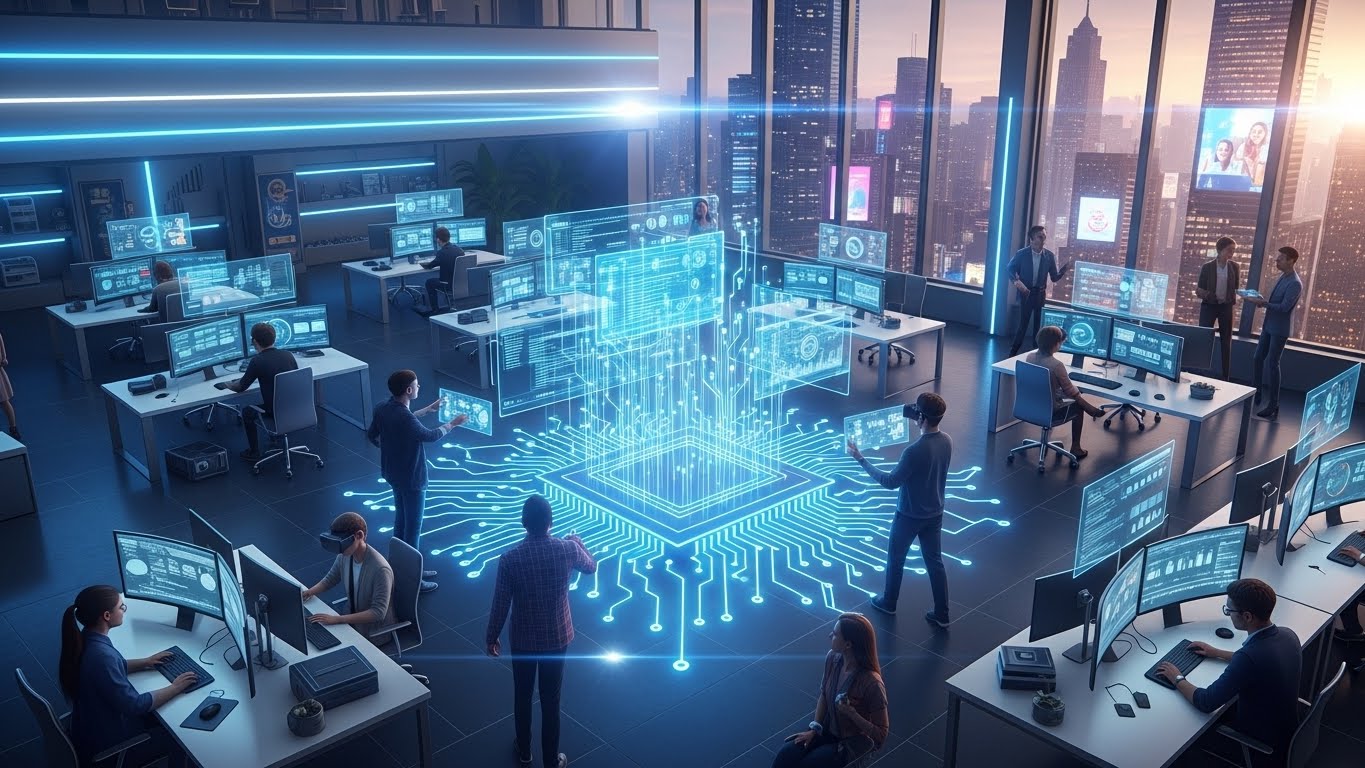

Understanding Technology in Today’s World
Technology has become an inseparable part of modern life, influencing how we communicate, work, learn, and even think. From smartphones and wearable devices to artificial intelligence and renewable energy systems, technology is not just a tool—it is a driving force shaping the way society evolves. It streamlines everyday tasks, enhances efficiency, and provides opportunities for innovation that were unimaginable a few decades ago.
The rapid advancement of technology has created a digital ecosystem where information flows seamlessly, decisions are data-driven, and human creativity is amplified by machines. Whether it is in business, healthcare, education, or entertainment, technology plays a central role in improving lives and redefining possibilities.
The Evolution of Technology
The journey of technology is a testament to human ingenuity. Early inventions, such as the wheel, the printing press, and simple mechanical tools, laid the foundation for industrial and scientific progress. The Industrial Revolution introduced mechanization and mass production, transforming societies and economies on a global scale.
The 20th century marked the digital revolution, with computers, the internet, and mobile devices changing the way humans interact, learn, and conduct business. Today, we are experiencing another wave of technological transformation driven by artificial intelligence, robotics, the Internet of Things, and advanced connectivity. Each stage of technological evolution has expanded human capabilities, enabling progress in ways previously unimaginable.
Artificial Intelligence: The Brain of Modern Technology
Artificial intelligence, commonly known as AI, has emerged as one of the most transformative technologies of the 21st century. AI systems can analyze massive amounts of data, recognize patterns, make predictions, and even simulate human decision-making. Applications of AI are found across industries—from healthcare and finance to entertainment and logistics.
In healthcare, AI assists in diagnosing diseases, predicting patient outcomes, and optimizing treatment plans. In business, AI enhances customer experiences, improves operational efficiency, and supports strategic decision-making. Even in daily life, AI powers virtual assistants, recommendation engines, and smart home devices. The ability of AI to learn and adapt makes it a key driver of innovation, capable of solving complex problems that were once thought impossible.
The Internet of Things: Connecting Everything
The Internet of Things, or IoT, represents a network of interconnected devices that collect and share data. IoT devices range from smart thermostats and wearable fitness trackers to industrial sensors and autonomous vehicles. These connected devices communicate with each other to provide real-time insights, improve efficiency, and automate processes.
In homes, IoT enables smart lighting, climate control, and security systems that can be managed remotely. In industries, IoT monitors machinery, predicts maintenance needs, and streamlines supply chains. The IoT ecosystem is creating a connected world where information flows seamlessly, enhancing decision-making and improving convenience in everyday life.
Advances in Communication Technology
Communication technology has undergone significant transformations over the past decades. From traditional landline telephones to mobile devices and instant messaging, the way humans interact has evolved dramatically. Video calls, social media platforms, and collaboration tools allow people to connect globally in real time, breaking down geographic and cultural barriers.
The advent of 5G networks is accelerating this evolution. Faster internet speeds, reduced latency, and improved connectivity enable technologies such as augmented reality, virtual reality, and real-time remote collaboration. Communication technology not only fosters personal interaction but also drives business growth, educational access, and societal progress.
Technology in Healthcare
Healthcare has been one of the most impacted sectors by technological advancement. Electronic health records, telemedicine, wearable health monitors, and robotic surgeries are improving patient care, reducing errors, and increasing accessibility. AI algorithms can now assist in early diagnosis of conditions like cancer or cardiovascular disease, allowing for timely intervention.
Remote healthcare technologies are also bridging gaps in access, providing consultations and monitoring patients in rural or underserved areas. This shift from reactive to proactive healthcare emphasizes prevention, personalized care, and efficiency. Technology has transformed healthcare into a more precise, responsive, and patient-centered system.
Technology and Education
Education has been revolutionized by technology, making learning more accessible, interactive, and personalized. Online courses, virtual classrooms, educational apps, and interactive platforms enable students to learn at their own pace and from anywhere in the world.
AI-driven adaptive learning systems analyze student performance to offer customized lessons and practice exercises, ensuring that each student receives instruction tailored to their needs. Virtual reality and gamification techniques make learning immersive and engaging, while collaborative tools connect students and teachers across continents. Technology is redefining education, preparing learners for a world that demands digital literacy and adaptability.
Sustainable Technology and the Environment
As environmental concerns grow, technology plays a vital role in promoting sustainability. Renewable energy solutions, energy-efficient devices, and smart grids help reduce carbon footprints and conserve resources. IoT-enabled systems allow industries and cities to monitor resource consumption, optimize energy use, and reduce waste.
Green technologies, such as solar panels, electric vehicles, and precision agriculture, demonstrate how innovation can support ecological balance. By leveraging technology responsibly, humans can address climate change challenges while continuing to meet the needs of a growing global population. Sustainability and technology are becoming inseparable in the pursuit of a balanced future.
Robotics and Automation
Robotics and automation are revolutionizing industries by enhancing productivity, precision, and safety. In manufacturing, robots perform repetitive or dangerous tasks, reducing workplace injuries and improving output quality. Autonomous systems in logistics, agriculture, and healthcare increase efficiency while lowering operational costs.
Robots are also entering everyday life in the form of personal assistants, delivery drones, and service robots. While automation raises questions about employment and workforce adaptation, it also offers opportunities to focus human efforts on creativity, innovation, and complex problem-solving. Robotics and automation are shaping a future where humans and machines work collaboratively.
Cybersecurity in a Digital World
With technological integration comes the critical need for cybersecurity. Cyber threats such as hacking, data breaches, identity theft, and ransomware pose risks to individuals, organizations, and governments. Protecting digital assets requires encryption, secure authentication, threat detection, and proactive security protocols.
Cybersecurity is not only a technical necessity but also a societal responsibility. Awareness, training, and robust policies are essential to safeguard sensitive information and maintain trust in digital systems. As technology advances, cybersecurity measures must evolve to protect against increasingly sophisticated threats.
Virtual and Augmented Reality
Virtual reality (VR) and augmented reality (AR) are changing the way humans interact with digital and physical worlds. VR creates fully immersive digital experiences, while AR overlays digital information onto real-world environments. These technologies have applications in gaming, education, medical training, architecture, and remote collaboration.
VR and AR enable experiential learning, interactive simulations, and enhanced entertainment experiences. By bridging the gap between imagination and reality, these technologies are opening new avenues for creativity, engagement, and productivity across multiple sectors.
Ethical Considerations in Technology
As technology advances, ethical considerations become increasingly important. Issues such as data privacy, AI bias, surveillance, and automation’s impact on employment require careful consideration. Responsible development and use of technology demand transparency, fairness, and accountability.
Ethics in technology ensures that innovations benefit society while minimizing harm. Policymakers, developers, and communities must collaborate to establish guidelines that balance progress with human values. The ethical use of technology will determine its long-term impact on society.
The Future of Technology
The future promises unprecedented technological advancements. Quantum computing, brain-computer interfaces, advanced AI, and global connectivity will redefine problem-solving, communication, and innovation. Technology will continue to transform industries, enhance daily life, and expand human potential.
However, the future also presents challenges. Balancing rapid innovation with ethical, environmental, and societal considerations is essential. The responsible adoption and integration of technology will shape the trajectory of civilization, highlighting the importance of foresight and collaboration in a tech-driven world.
Conclusion: Embracing a Technology-Driven Future
Technology has reshaped the world, touching every aspect of human life. From AI and IoT to robotics, VR, and sustainable innovations, technology is redefining how we live, work, and interact. Its impact is visible in healthcare, education, communication, industry, and the environment, creating a more connected, efficient, and innovative society.
The key to thriving in a technology-driven world lies in embracing innovation responsibly. Understanding its potential, managing its challenges, and integrating it ethically into society will determine the path toward a better future. Technology is not merely a tool; it is a transformative force that amplifies human potential and shapes the destiny of civilization.