Introduction
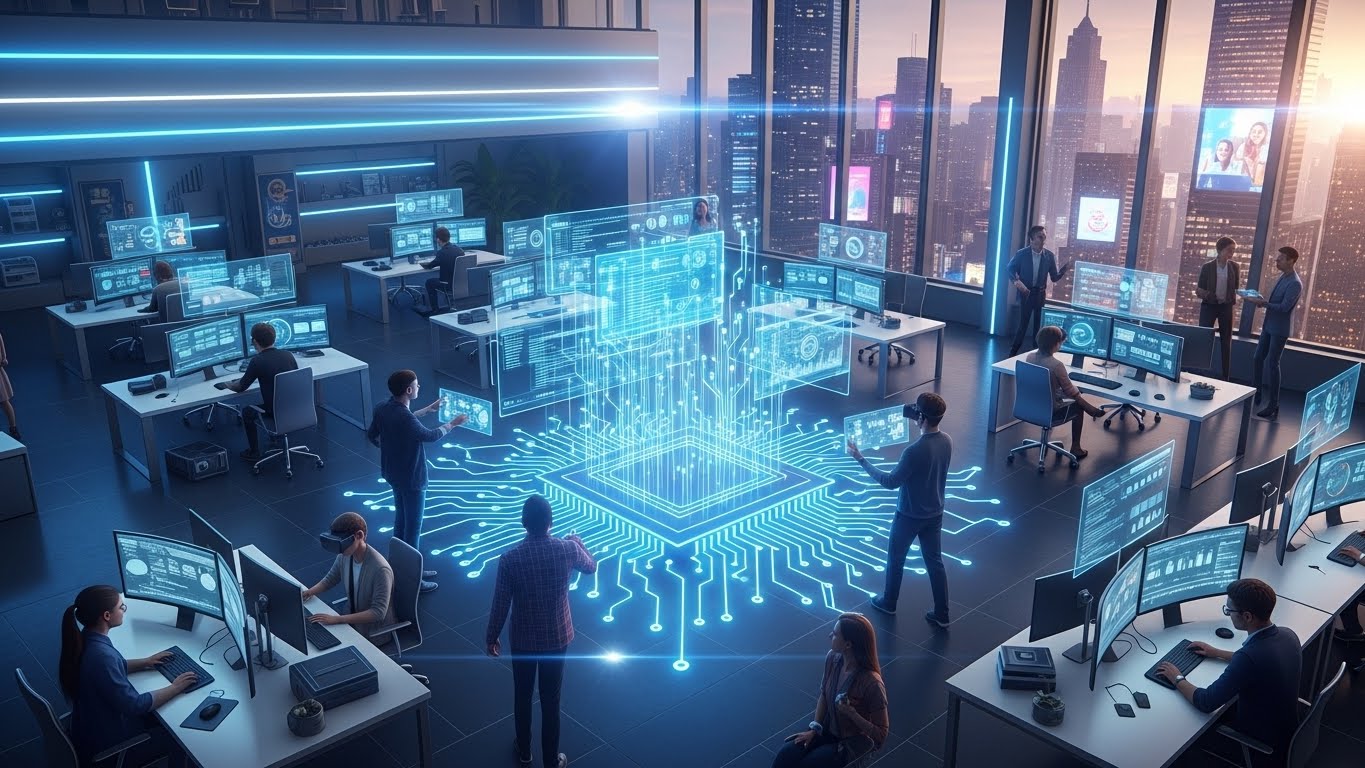
Technology has become the backbone of modern civilization, influencing almost every aspect of daily life. From communication and transportation to healthcare and education, technological advancements continuously redefine how people live and work. It has not only enhanced efficiency but also expanded human capabilities in ways that were once unimaginable. In the 21st century, understanding the role of technology is essential to navigate the evolving landscape of society, business, and personal life. This blog explores the key technological trends shaping our world and examines their potential impacts for the future.
The Evolution of Technology
The journey of technology spans centuries, beginning with simple tools and mechanical innovations. Early human inventions such as the wheel, printing press, and the compass laid the foundation for progress. The industrial revolution brought mechanization, electricity, and large-scale manufacturing, fundamentally transforming human productivity.
The digital age introduced computers, the internet, and mobile devices, creating a hyper-connected world. Today, technology is characterized by smart devices, artificial intelligence, big data analytics, and automation. Each development builds upon the previous, creating a dynamic ecosystem where progress accelerates at an unprecedented pace.
Integration of Technology in Daily Life
Modern life is inseparable from technology. Smartphones serve as personal assistants, communication hubs, and entertainment centers. Smart home devices adjust lighting, temperature, and security based on user preferences. Wearable technology monitors health metrics, tracks physical activity, and provides insights that help individuals make informed lifestyle choices.
Digital applications have transformed shopping, transportation, and even financial management. Mobile banking, ride-sharing platforms, and e-commerce solutions make everyday tasks faster, safer, and more convenient. This seamless integration of technology into daily routines highlights its essential role in enhancing quality of life.
Artificial Intelligence and Machine Learning
Artificial intelligence (AI) has emerged as one of the most transformative technological innovations. AI systems can process massive amounts of data, recognize patterns, and make informed predictions. Applications of AI range from virtual assistants and smart recommendations to advanced data analytics and automation.
Machine learning, a subset of AI, enables systems to learn from data and improve over time without explicit programming. In healthcare, AI supports medical diagnostics and personalized treatment plans. In finance, AI identifies fraudulent activities and optimizes investments. In manufacturing, predictive maintenance powered by AI reduces downtime and operational costs. This combination of intelligence and automation is reshaping industries and redefining human productivity.
Big Data and Analytics
The modern world generates enormous volumes of data every second. From social media interactions to financial transactions, these datasets offer valuable insights when analyzed effectively. Big data analytics allows organizations to identify trends, optimize operations, and make strategic decisions.
Companies leverage data to understand consumer preferences, improve products, and enhance customer experience. Governments use analytics to optimize public services, infrastructure, and urban planning. While data-driven insights provide countless benefits, they also raise critical concerns about privacy, security, and ethical usage, which must be addressed responsibly.
Cloud Computing and Global Connectivity
Cloud computing has revolutionized the way information is stored, accessed, and shared. Instead of relying solely on local hardware, data and applications reside on remote servers accessible from anywhere in the world. This capability has enabled remote work, real-time collaboration, and scalable business operations.
Cloud technology supports numerous sectors, from education and entertainment to healthcare and finance. It empowers startups to innovate without heavy infrastructure investment and allows large corporations to manage vast amounts of data efficiently. Cloud computing exemplifies how technology facilitates global connectivity and democratizes access to resources.
The Internet of Things (IoT)
The Internet of Things connects physical devices to the digital ecosystem, creating smart and interactive systems. In homes, IoT devices automate energy management, security, and everyday tasks. In cities, sensors monitor traffic, pollution, and utilities to improve urban efficiency. Industrial IoT applications optimize manufacturing, logistics, and supply chains.
By linking devices and systems, IoT enables real-time data collection and decision-making. This interconnectedness improves efficiency, safety, and convenience while transforming how individuals and organizations interact with the environment.
Virtual and Augmented Reality
Virtual reality (VR) immerses users in fully digital environments, while augmented reality (AR) overlays digital information onto the real world. These technologies have wide-ranging applications in gaming, education, healthcare, architecture, and training.
VR allows medical professionals to simulate surgical procedures or students to explore historical events interactively. AR enhances navigation, product visualization, and design workflows. These immersive technologies redefine human experiences, expanding the boundaries of learning, creativity, and entertainment.
Technology in Education
Education has undergone a dramatic transformation thanks to technology. Online platforms, digital textbooks, and interactive simulations provide engaging and flexible learning experiences. AI-driven learning tools offer personalized instruction, adapting content to individual strengths and weaknesses.
Technology also ensures educational accessibility. Students in remote regions can participate in global classrooms, access vast resources, and collaborate on projects with peers worldwide. By fostering creativity, critical thinking, and problem-solving skills, educational technology prepares learners for the demands of a digital workforce.
The Future of Work
Technology is reshaping the workplace. Automation and AI reduce repetitive tasks, enabling employees to focus on innovation, strategy, and creative problem-solving. Digital collaboration tools allow teams to work across borders, breaking down geographical limitations.
The future workplace will emphasize adaptability, digital literacy, and soft skills alongside technical expertise. Humans will collaborate with intelligent systems to achieve higher productivity, creativity, and efficiency. Continuous learning and upskilling will be essential for thriving in this technology-driven work environment.
Green Technology and Sustainability
Sustainability is increasingly intertwined with technological innovation. Renewable energy solutions, smart grids, electric vehicles, and energy-efficient infrastructure help reduce environmental impact. Advanced monitoring and IoT-enabled systems optimize resource usage, track emissions, and support sustainable practices.
Green technology is not only environmentally responsible but also economically beneficial. It creates new industries, job opportunities, and pathways for innovation, showing that progress can coexist with ecological stewardship.
Ethical and Social Considerations
The rise of advanced technology raises important ethical and social questions. Issues such as data privacy, cybersecurity, algorithmic bias, and digital inequality must be addressed. Ethical frameworks and regulations ensure that technological advancement aligns with human values and societal welfare.
Stakeholders—including governments, corporations, and individuals—must prioritize transparency, accountability, and fairness. Promoting digital literacy and responsible usage ensures that technology benefits all sections of society rather than creating divides.
Emerging Technologies and the Road Ahead
Emerging technologies such as quantum computing, biotechnology, autonomous systems, and space exploration are pushing the boundaries of innovation. Quantum computing promises unprecedented processing power for complex problems, while biotechnology offers breakthroughs in medicine and agriculture. Autonomous vehicles, drones, and robotics are transforming industries, and space exploration continues to expand humanity’s horizons.
These technologies have the potential to redefine global economies, social structures, and human experiences. Preparing for these advancements requires adaptability, ethical foresight, and continuous learning to ensure progress benefits society as a whole.
Conclusion
Technology is the driving force behind modern civilization, shaping how we communicate, work, learn, and experience the world. From artificial intelligence and IoT to virtual reality and green innovations, it influences nearly every aspect of life. While technology presents immense opportunities, it also requires careful consideration of ethical, social, and environmental implications.
The future belongs to those who can harness technology responsibly, balancing innovation with ethics and sustainability. Technology is not just a tool—it is the foundation of a more connected, efficient, and innovative world. By embracing it thoughtfully, humanity can ensure that the digital revolution leads to a brighter and more equitable future.