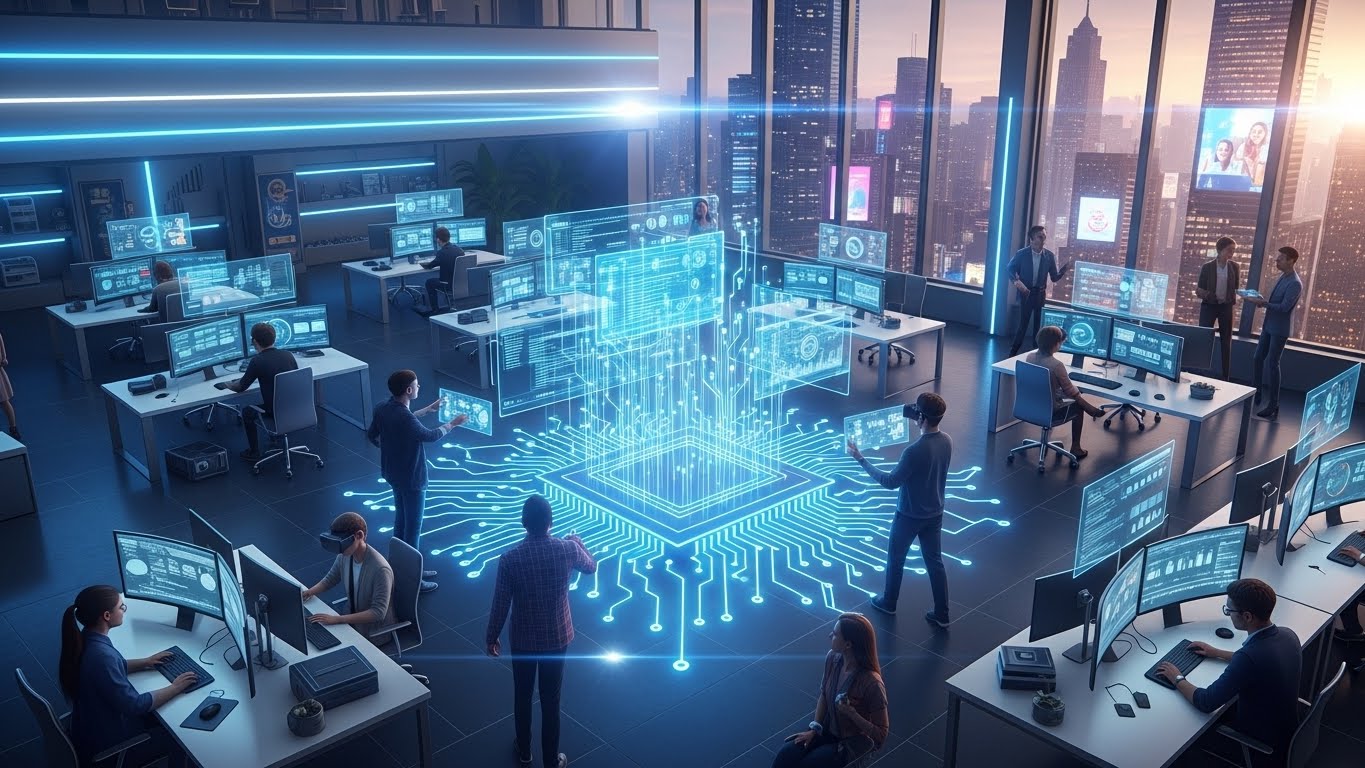

Technology is no longer just a part of life—it is the backbone of modern civilization. From the way we communicate to how we work, travel, and entertain ourselves, technological innovations are transforming every aspect of human existence. As we stand on the threshold of the next era, it becomes crucial to understand the trends, opportunities, and challenges that are shaping the future of technology. This blog explores some of the most impactful advancements in the tech world, their applications, and the societal implications they bring.
Artificial Intelligence: Beyond Human Intelligence
Artificial intelligence (AI) has rapidly evolved from a theoretical concept to a practical force driving industries worldwide. AI systems can process large volumes of data, recognize patterns, and make informed predictions, often surpassing human capabilities in specific tasks.
In healthcare, AI assists doctors by analyzing medical images to detect conditions such as cancer, heart disease, or neurological disorders early. Predictive models allow for personalized treatment plans, enhancing patient outcomes while minimizing side effects. In finance, AI algorithms analyze market trends, optimize investment strategies, and detect fraudulent activities in real time. Beyond industries, AI powers virtual assistants, chatbots, and recommendation systems, enhancing everyday experiences by delivering personalized services.
Despite these benefits, AI introduces ethical challenges, including bias in decision-making, privacy concerns, and the potential displacement of human labor. Ensuring AI development is transparent, fair, and accountable is crucial to maximize its societal benefits.
Quantum Computing: Breaking the Limits of Possibility
Quantum computing is set to revolutionize computing by solving problems that are currently intractable for classical computers. Unlike traditional computers that rely on binary bits (0 or 1), quantum computers use qubits, which can exist in multiple states simultaneously. This property enables them to perform highly complex calculations at unprecedented speeds.
Quantum computing holds transformative potential across multiple domains. In medicine, it can simulate molecular structures, facilitating rapid drug discovery and personalized therapies. In cybersecurity, quantum algorithms could render current encryption techniques obsolete, demanding new methods for secure communication. While the technology is still in its experimental stages, the progress in quantum research suggests a future where problems once considered unsolvable may become solvable within minutes or hours.
Biotechnology: Engineering Life for a Better Tomorrow
Biotechnology is reshaping healthcare, agriculture, and environmental conservation. With tools like CRISPR, scientists can edit genes precisely, leading to breakthroughs in medicine and sustainable solutions for the planet.
In healthcare, gene editing has the potential to cure inherited disorders, fight cancer, and develop therapies tailored to individual genetic profiles. In agriculture, biotechnology has produced crops that are more resilient to climate changes, pests, and diseases, addressing global food security challenges. Additionally, biotechnological research contributes to creating biofuels, biodegradable materials, and pollution-reducing microorganisms.
However, manipulating life at the genetic level raises ethical concerns. Responsible research and regulation are vital to ensure that biotechnology advances human welfare without harming ecosystems or compromising ethical standards.
Renewable Energy: Powering a Sustainable World
The shift to renewable energy is critical in combating climate change and ensuring long-term sustainability. Solar, wind, and energy storage technologies are transforming global energy production, making it cleaner, more efficient, and widely accessible.
Solar panels are now more efficient and affordable, while wind turbines harness energy more effectively than ever before. Advanced batteries store excess energy, ensuring a steady power supply even when sunlight or wind is unavailable. Electric vehicles benefit from these advancements, reducing reliance on fossil fuels and lowering carbon emissions. Smart grids enhance energy distribution, reduce wastage, and make electricity systems more reliable. Collectively, these innovations are driving a transition toward a cleaner and more sustainable energy ecosystem.
The Internet of Things: Connecting Everything
The Internet of Things (IoT) is creating a world where devices, infrastructure, and systems are seamlessly connected. IoT allows objects to collect, transmit, and analyze data, enhancing efficiency and enabling smarter decision-making.
In homes, IoT automates lighting, heating, and security systems, improving comfort and energy efficiency. In industries, IoT sensors monitor machinery, predict maintenance needs, and optimize operations, reducing downtime and costs. Smart cities utilize IoT to manage traffic flow, optimize public services, and conserve energy. By connecting everyday devices, IoT is transforming how people live and work, creating environments that respond intelligently to human needs.
Virtual Reality and Augmented Reality: Immersive Digital Worlds
Virtual reality (VR) and augmented reality (AR) are changing the way humans interact with technology. VR immerses users in fully digital environments, while AR overlays digital information onto the real world, enhancing perception and engagement.
In education, VR allows students to experience historical events or conduct complex scientific experiments interactively. In healthcare, AR helps surgeons perform precise operations by overlaying critical information during procedures. VR and AR also revolutionize professional training, providing risk-free simulations for complex tasks in aviation, construction, and emergency response. The immersive experiences offered by these technologies are transforming learning, entertainment, and professional development.
Cybersecurity: Protecting the Digital Realm
As technology becomes more embedded in daily life, cybersecurity has become paramount. Threats such as ransomware, data breaches, and phishing attacks are increasing in sophistication, making robust protection measures essential.
AI-powered cybersecurity tools detect anomalies, predict potential attacks, and respond in real time. However, cybercriminals also use AI to develop advanced threats, creating a continuous arms race. Ensuring the safety of sensitive data and critical infrastructure requires vigilance, constant innovation, and collaboration among governments, industries, and individuals.
Automation and Robotics: Transforming Work and Productivity
Automation and robotics are revolutionizing industries by performing repetitive, hazardous, or highly precise tasks efficiently. In manufacturing, robots assemble products with speed and accuracy, reducing human error. In logistics, automated systems manage warehouses, track inventory, and optimize delivery routes.
Emerging technologies like autonomous vehicles, drones, and robotic assistants are increasingly entering mainstream use, improving efficiency and convenience. While automation enhances productivity, it also emphasizes the need for workforce adaptation. Reskilling and upskilling programs are crucial to prepare workers for roles that require creativity, problem-solving, and oversight of automated systems.
Ethical and Societal Implications of Technology
Rapid technological advancement brings profound ethical and societal considerations. Issues such as AI bias, data privacy, automation-driven job displacement, and the ethical use of biotechnology require careful thought.
Developing responsible frameworks for innovation involves transparency, accountability, and inclusive decision-making. Policymakers, technologists, and communities must collaborate to ensure technology benefits society at large, balancing progress with ethical responsibility.
The Future of Technology: Opportunities and Challenges
The future of technology is filled with incredible promise and complex challenges. Artificial intelligence, quantum computing, biotechnology, renewable energy, IoT, VR, AR, cybersecurity, and automation are reshaping society in ways previously unimaginable.
These innovations offer opportunities to improve healthcare, increase efficiency, create sustainable energy systems, and enhance learning and human experiences. However, they also pose risks including environmental impact, social inequality, ethical dilemmas, and potential misuse. Successfully navigating this technological future requires foresight, responsible governance, and adaptive strategies that maximize benefits while minimizing negative consequences.
Conclusion: Embracing the Technological Renaissance
Technology today is more than a tool—it is the driver of human progress. AI enhances intelligence, quantum computing expands problem-solving capabilities, biotechnology redefines life, and renewable energy powers a sustainable future. IoT, VR, AR, robotics, and cybersecurity ensure the digital world is connected, immersive, and secure.
The choices we make now will shape the trajectory of technology’s impact on future generations. Responsible innovation, ethical practices, and sustainable development are essential to ensure that technology empowers humanity rather than creating inequality or harm. By embracing these principles, we can harness the full potential of the technological renaissance to create a smarter, safer, and more connected world.