
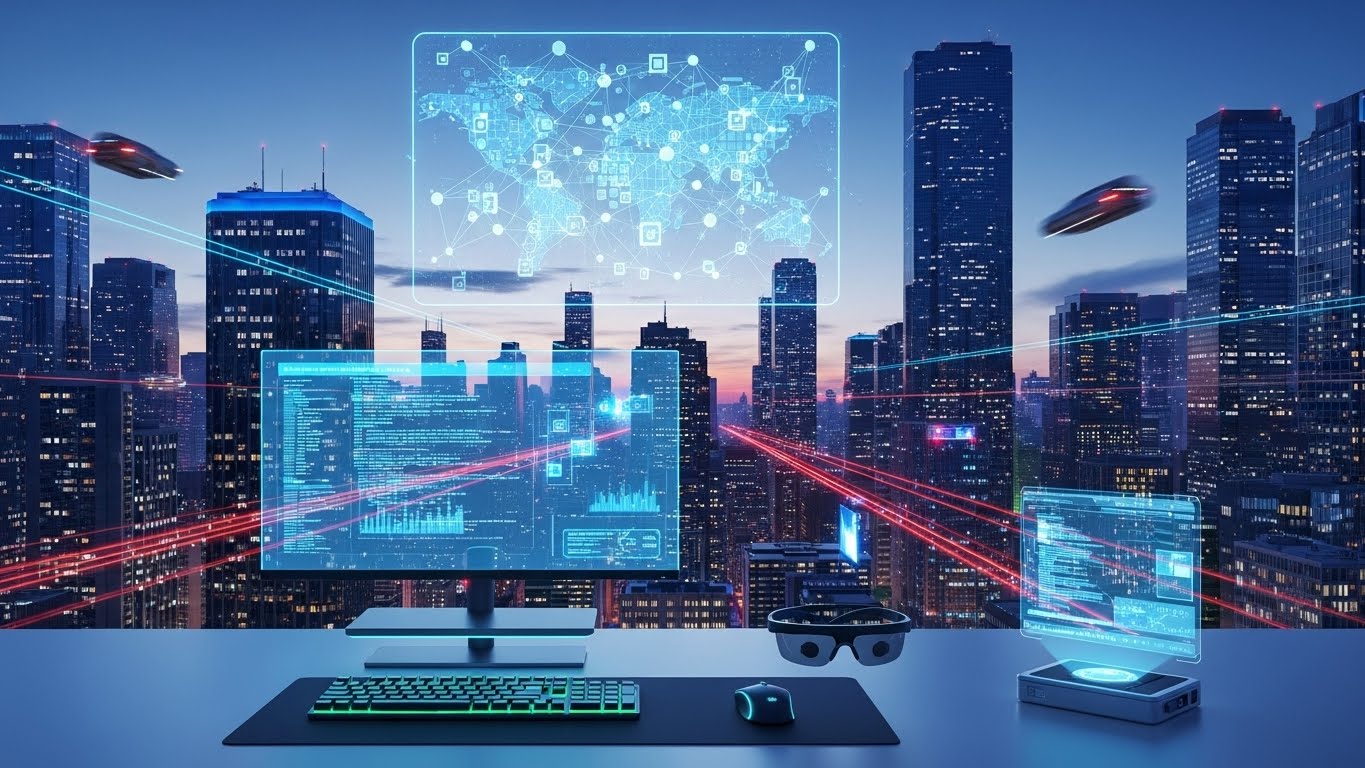
Introduction: A Glimpse into the Tech Future
The landscape of technology is ever-evolving, constantly reshaping the world around us. As we stand on the precipice of groundbreaking innovations, it’s hard not to marvel at how far we’ve come in just a few decades. From artificial intelligence (AI) and quantum computing to the explosion of the Internet of Things (IoT), the technological developments we see today are only the beginning of an exciting future.
This blog post explores the key technological advancements that are currently shaping our world and looks ahead to the technologies that will dominate the next few years. These innovations are not just buzzwords; they are catalysts for change, redefining industries, enhancing human capabilities, and altering the way we interact with the world.
The Rise of Artificial Intelligence (AI): Revolutionizing Industries
Artificial Intelligence has moved from a futuristic concept to a present-day reality. With advancements in machine learning, deep learning, and natural language processing, AI is transforming virtually every industry.
AI in Healthcare
AI-powered tools are enhancing diagnostic accuracy, providing personalized treatment recommendations, and even predicting health conditions before they manifest. Algorithms are trained to analyze vast datasets from medical images, genetic information, and patient records, allowing doctors to make more informed decisions. AI is also transforming drug discovery by simulating molecular behavior and speeding up the process of identifying potential candidates for new medications.
AI in Business and Automation
In business, AI is streamlining processes, improving customer experiences, and reducing operational costs. From chatbots in customer service to AI-driven analytics that predict market trends, organizations are leveraging the power of AI to gain a competitive edge. Automation powered by AI is also making waves in manufacturing, logistics, and supply chain management, optimizing productivity and reducing human error.
AI and Ethics: The Challenges Ahead
While the benefits of AI are undeniable, the ethical implications surrounding its use are a topic of intense debate. Concerns around privacy, security, and bias in AI algorithms are issues that need to be addressed as the technology continues to develop. It is essential that we establish frameworks and guidelines to ensure AI is used responsibly and ethically.
Quantum Computing: The Next Leap in Processing Power
Quantum computing represents the next frontier in computing technology. Unlike traditional computers, which process information as bits (0s or 1s), quantum computers use quantum bits, or qubits, which can exist in multiple states simultaneously. This capability allows quantum computers to solve complex problems that are currently beyond the reach of classical computers.
Quantum Computing in Cryptography
One of the most significant implications of quantum computing is its potential to break current cryptographic systems. Encryption methods that are secure today could become vulnerable to quantum attacks. As a result, researchers are actively developing quantum-resistant encryption methods that can withstand the power of quantum computers.
The Impact on Science and Research
Quantum computers could revolutionize fields like materials science, chemistry, and physics. By simulating molecular interactions at an unprecedented level of detail, quantum computers could lead to the discovery of new materials with specific properties, unlock new drugs and therapies, and help solve complex problems in climate modeling and physics. The possibilities are vast, and researchers are just beginning to scratch the surface.
The Internet of Things (IoT): Connecting the World
The Internet of Things (IoT) refers to the network of physical devices, vehicles, appliances, and other objects embedded with sensors and software that allow them to connect and exchange data.
IoT in Smart Homes
In the realm of smart homes, IoT devices are enabling a new level of convenience and efficiency. Thermostats, security cameras, smart lights, and voice assistants are all part of the interconnected ecosystem that allows users to control their environment with a smartphone or voice command. IoT is making homes more energy-efficient, secure, and comfortable.
IoT in Healthcare: A Game-Changer
IoT has also made significant strides in healthcare, with wearable devices like smartwatches and fitness trackers monitoring vital signs such as heart rate, blood pressure, and sleep patterns. These devices not only provide individuals with valuable insights into their health but also enable healthcare providers to monitor patients remotely, improving the management of chronic conditions and reducing the need for in-person visits.
The Challenges of IoT: Security and Privacy Concerns
As IoT devices proliferate, so do concerns about security and privacy. Many IoT devices collect vast amounts of personal data, making them attractive targets for hackers. Ensuring the security of IoT networks and protecting user privacy is an ongoing challenge. Manufacturers need to implement strong encryption protocols and regularly update devices to prevent vulnerabilities from being exploited.
Blockchain Technology: Transforming Trust and Transparency
Blockchain, the technology behind cryptocurrencies like Bitcoin, is poised to disrupt industries far beyond finance. At its core, blockchain is a decentralized, distributed ledger that allows for secure, transparent transactions without the need for a central authority.
Blockchain in Supply Chain Management
One of the most promising applications of blockchain is in supply chain management. By using blockchain to track products from manufacturer to retailer, companies can ensure the authenticity of goods, reduce fraud, and improve traceability. Blockchain allows for a transparent record of every transaction, making it easier to identify where and when problems occur.
Blockchain in Finance and Beyond
In the financial sector, blockchain has the potential to streamline cross-border payments, reduce transaction fees, and improve security. The decentralized nature of blockchain eliminates the need for intermediaries like banks, making financial transactions faster and more affordable. Beyond finance, blockchain is being explored for applications in healthcare, voting systems, intellectual property, and even entertainment.
5G Networks: The Backbone of Future Connectivity
The rollout of 5G networks promises to revolutionize connectivity by providing faster internet speeds, lower latency, and greater capacity. This new generation of mobile networks is expected to unlock the potential of technologies like augmented reality (AR), virtual reality (VR), and autonomous vehicles.
5G and Smart Cities
5G will play a pivotal role in the development of smart cities, where everything from traffic lights to public transportation systems is connected and optimized. With ultra-fast data transfer speeds and low latency, 5G will enable real-time communication between devices, making cities more efficient, sustainable, and responsive.
5G and Autonomous Vehicles
The rise of autonomous vehicles relies heavily on fast, reliable connectivity. 5G will allow autonomous vehicles to communicate with each other and their surroundings in real time, improving safety and efficiency on the roads. By enabling vehicles to share data about road conditions, traffic, and potential hazards, 5G will be crucial in making autonomous transportation a reality.
The Role of Augmented Reality (AR) and Virtual Reality (VR) in Transforming Experiences
Augmented Reality (AR) and Virtual Reality (VR) are two immersive technologies that are transforming the way we interact with digital content and the physical world.
AR in Retail and E-commerce
In retail, AR is enhancing the shopping experience by allowing customers to visualize products in their own environment before making a purchase. For example, IKEA’s AR app lets users see how furniture would look in their homes, while beauty brands use AR to allow customers to try on makeup virtually.
VR in Education and Training
Virtual Reality, on the other hand, is being used to create immersive learning experiences. In fields like medicine, engineering, and aviation, VR is providing hands-on training without the risk or expense of real-world simulations. VR is also revolutionizing the entertainment industry, offering gamers, moviegoers, and viewers immersive experiences that were once unimaginable.
Conclusion: Embracing the Future of Technology
As we look to the future, it’s clear that the world of technology will continue to advance at an exponential rate. While some of these innovations may still feel like science fiction, they are quickly becoming part of our everyday reality. Whether it’s through AI, quantum computing, or 5G networks, these technological advancements are changing the way we live, work, and interact with the world.
However, with these advancements come challenges. Issues related to privacy, security, and ethical use of technology must be addressed in order to fully realize the potential of these innovations. The key to a successful technological future will be balancing innovation with responsibility.
As we embrace these emerging technologies, it’s crucial to remain mindful of their implications and ensure they are used for the greater good. The future is full of limitless possibilities—one that promises to shape the way we experience the world in ways we can only begin to imagine.