
Introduction
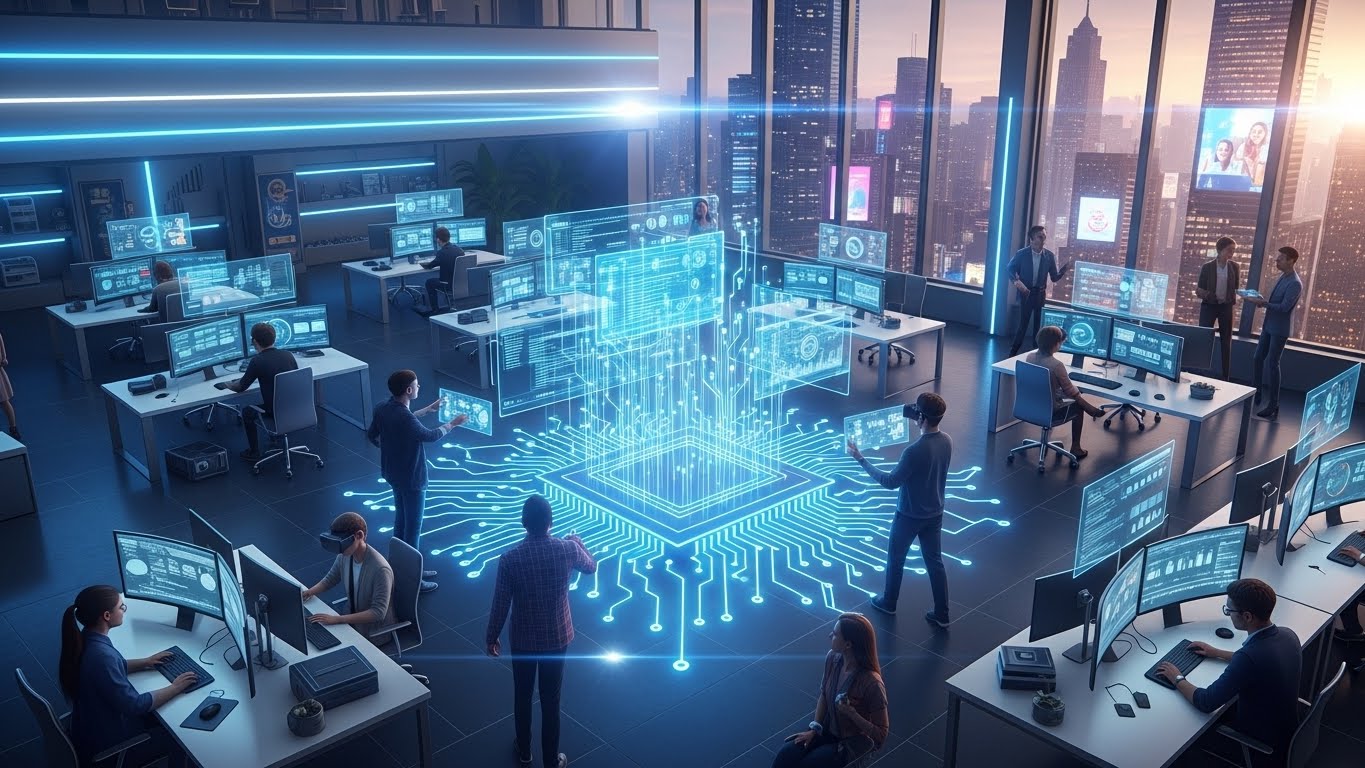
Technology is not just evolving; it is silently reshaping the very fabric of our lives. We often imagine technological revolutions as grand, visible changes—flying cars, humanoid robots, or futuristic cities glowing with neon light. Yet, the most powerful revolutions in tech happen quietly, embedded within everyday tools and systems that surround us. From artificial intelligence guiding our decisions to invisible algorithms powering our online experiences, a new digital era is unfolding—an era driven by innovation, automation, and intelligent connectivity.
The Rise of Artificial Intelligence
Artificial Intelligence (AI) is no longer confined to science fiction. It has become the brain behind the modern world. Every time we unlock a smartphone with our face, ask a digital assistant a question, or get personalized movie recommendations, AI is working behind the scenes. What makes AI revolutionary is its ability to learn, adapt, and improve over time.
Machine learning, a subset of AI, allows systems to analyze vast amounts of data and recognize patterns without human intervention. This ability is transforming industries such as healthcare, finance, and education. In hospitals, AI helps doctors detect diseases with remarkable accuracy. In banking, it prevents fraud by recognizing suspicious activities. In classrooms, it creates personalized learning experiences for students.
The future of AI promises even deeper integration into daily life. Intelligent machines may soon collaborate with humans on complex tasks, not to replace us, but to amplify our creativity and productivity. However, this progress comes with challenges. Ethical concerns, data privacy, and job displacement are significant issues that need balanced solutions. The goal is to ensure AI serves humanity rather than dominates it.
The Internet of Things: A Connected World
The Internet of Things (IoT) represents another silent revolution. It connects everyday objects—such as watches, refrigerators, cars, and even streetlights—to the internet, enabling them to collect and share data. The beauty of IoT lies in its ability to make our world smarter and more efficient.
Imagine a smart home that adjusts lighting, temperature, and security automatically based on your routine. Or a city that uses sensors to manage traffic flow, reduce energy consumption, and enhance public safety. This level of connectivity not only improves convenience but also supports sustainable living.
In industries, IoT is optimizing manufacturing processes through predictive maintenance, where machines alert engineers before breakdowns occur. In agriculture, smart sensors monitor soil and weather conditions, allowing farmers to use resources more efficiently. The possibilities are endless, yet this interconnectedness demands strong cybersecurity measures to protect sensitive data from misuse.
The Power of Cloud Computing
Cloud computing has transformed how businesses and individuals store and process information. Instead of relying on physical devices or servers, data now lives in virtual spaces known as the cloud. This shift offers flexibility, scalability, and accessibility like never before.
Companies can now operate globally without the burden of heavy infrastructure. Startups can launch innovative services using cloud-based tools at a fraction of the traditional cost. Even individuals benefit from this technology—storing photos, documents, and projects securely while accessing them anytime, anywhere.
The cloud also serves as the foundation for modern innovations such as artificial intelligence and big data analytics. By offering vast computing power and real-time collaboration, it has redefined how we work and communicate. However, the reliance on cloud systems also raises questions about privacy, control, and digital dependency. As more aspects of life move online, ensuring transparency and data protection becomes critical.
The Dawn of Quantum Computing
Beyond traditional computing lies the mysterious and promising world of quantum computing. Unlike classical computers that use bits as 0s and 1s, quantum computers use quantum bits or qubits, allowing them to process multiple possibilities simultaneously. This makes them extraordinarily powerful for certain types of calculations.
Quantum computing could revolutionize fields that require immense computational power, such as drug discovery, cryptography, and climate modeling. For example, simulating molecular interactions at the quantum level could lead to breakthroughs in medicine. Similarly, it could develop new materials or optimize complex logistics systems.
Despite its promise, quantum computing is still in its early stages. Building stable qubits and reducing error rates remain major challenges. Yet, as research progresses, it could unlock possibilities beyond our current imagination, redefining the limits of computational science.
The Transformation of Work Through Automation
Automation is one of the most impactful trends shaping the global workforce. Robots and intelligent software are now capable of performing repetitive, dangerous, or highly precise tasks faster and more accurately than humans.
In manufacturing, robotic arms assemble products with unmatched efficiency. In logistics, automated systems manage warehouses and track shipments in real-time. Even creative fields such as writing, design, and music are experiencing automation through advanced algorithms that can generate content.
While automation enhances productivity, it also disrupts traditional employment patterns. Many fear job losses due to machines replacing human labor. However, history shows that every technological revolution creates new opportunities. The future of work will likely emphasize creativity, problem-solving, and human empathy—qualities machines cannot replicate. Upskilling and continuous learning will be essential to thrive in this evolving landscape.
Green Technology and Sustainable Innovation
As the world faces environmental challenges, technology is emerging as both a solution and a responsibility. Green technology, also known as clean tech, focuses on minimizing the negative impact of human activity on the planet.
Renewable energy sources such as solar, wind, and hydroelectric power are gaining momentum as sustainable alternatives to fossil fuels. Electric vehicles are reducing carbon emissions, while smart grids manage energy distribution efficiently.
Advancements in recycling technology, sustainable agriculture, and eco-friendly materials are helping industries reduce waste and conserve resources. Moreover, data analytics and AI play a crucial role in tracking climate patterns and designing better sustainability strategies.
Technology, when guided by ethical and environmental principles, can lead humanity toward a greener and more balanced future. The challenge lies in aligning progress with preservation, ensuring that innovation benefits both people and the planet.
The Metaverse and Digital Reality
The concept of the metaverse has captured global attention. It envisions a digital universe where people can interact, work, and play through immersive technologies like virtual reality (VR) and augmented reality (AR). In this emerging space, the boundaries between the physical and digital worlds blur.
VR allows users to step into fully simulated environments, while AR overlays digital elements onto the real world. Together, they are transforming entertainment, education, and even remote collaboration. Students can explore historical landmarks through VR, architects can visualize designs in 3D, and professionals can hold virtual meetings across continents.
The metaverse also introduces new economic possibilities. Digital goods, virtual real estate, and avatar-based interactions are shaping the next generation of online experiences. However, issues of privacy, identity, and accessibility will need to be addressed to ensure inclusivity and fairness in this new digital frontier.
Cybersecurity in the Digital Age
As technology becomes deeply embedded in our lives, cybersecurity has become more critical than ever. With increasing data generation, the threat of cyberattacks, identity theft, and digital fraud continues to rise. Protecting sensitive information is not just a corporate responsibility but a personal necessity.
Modern cybersecurity strategies use AI to detect anomalies, blockchain to secure transactions, and encryption to safeguard communications. However, the most effective defense lies in awareness. Individuals must adopt good digital habits—using strong passwords, avoiding suspicious downloads, and regularly updating software.
Cybersecurity is not a one-time solution but an ongoing effort. As technology evolves, so do cyber threats. Building a secure digital environment requires global cooperation, innovation, and constant vigilance.
Conclusion
Technology is not merely changing our tools; it is redefining our possibilities. The invisible revolution happening around us is more profound than any in history. Artificial intelligence is enhancing decision-making, the Internet of Things is connecting our world, quantum computing is challenging the limits of physics, and green technology is steering us toward sustainability.
Yet, the essence of technological progress lies not in machines but in humanity’s vision for the future. The true power of technology is realized when it serves people, enhances well-being, and nurtures creativity. As we stand on the threshold of this new era, our responsibility is to guide innovation wisely—to build a future where technology amplifies the best of humanity rather than replacing it.
The invisible revolution has begun. It is up to us to shape it into a legacy of progress, equality, and hope.