
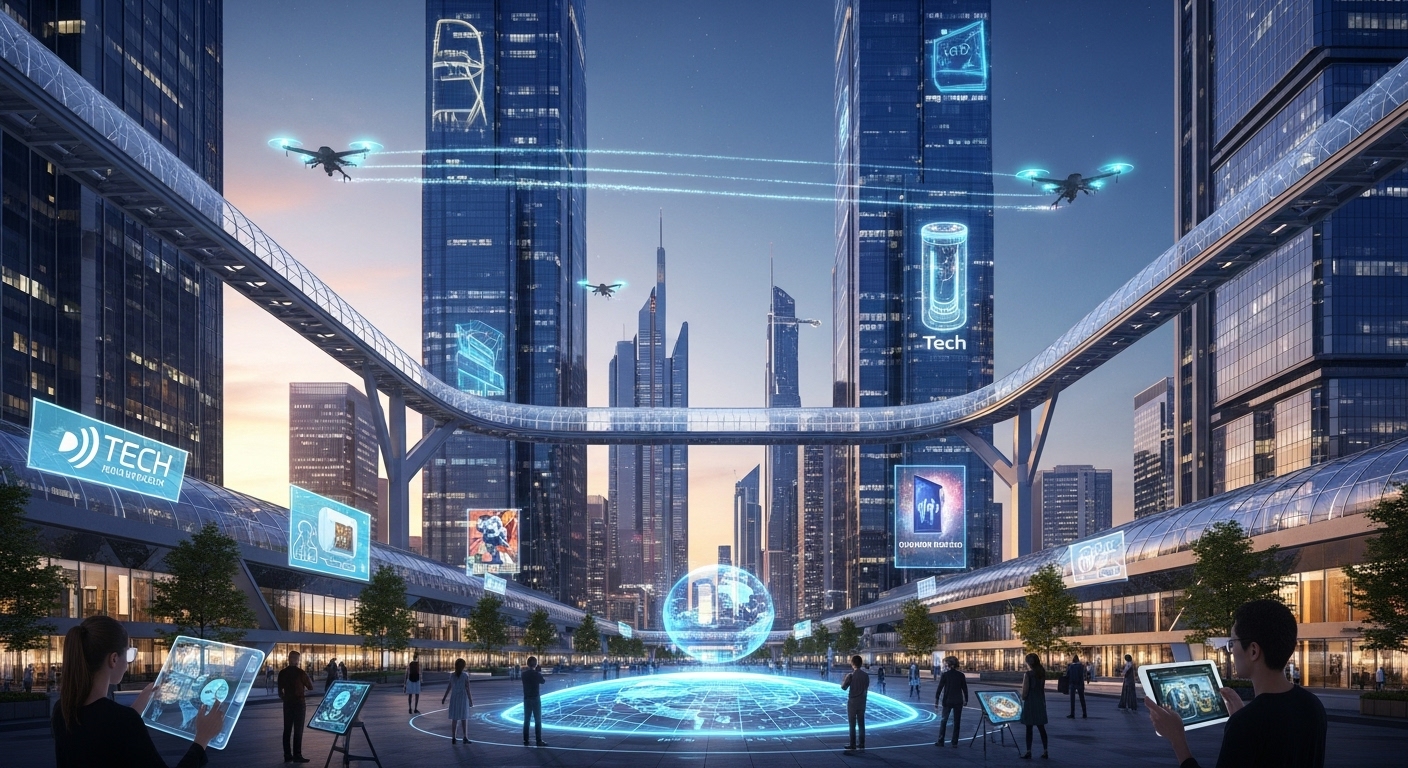
Introduction: Technology as a Driving Force
Technology has become the heartbeat of modern civilization, influencing every aspect of life from communication to healthcare, education, business, and entertainment. In today’s fast-paced world, technological innovations are no longer optional; they are essential for growth, development, and staying connected.
From smartphones and artificial intelligence to renewable energy and smart infrastructure, technology shapes our daily routines and drives global progress. This blog explores the evolution of technology, its applications, impact on society and the economy, ethical challenges, and future possibilities, highlighting how technology is not just a tool, but a transformative force.
The Evolution of Technology
The story of technology is a journey of human ingenuity. Early innovations like the wheel, the printing press, and mechanized tools laid the foundation for modern society. The Industrial Revolution accelerated technological development, introducing machines, electricity, and mass production.
The 20th century marked the rise of computers, telecommunications, and the internet. These innovations connected the world, enabled data processing, and gave birth to the digital age. Today, we live in an era of rapid advancement, with artificial intelligence, robotics, biotechnology, and quantum computing revolutionizing industries and daily life.
Technology in Communication
Modern communication relies heavily on technology. Smartphones, instant messaging, video calls, and social media have transformed the way people interact. Individuals can now connect with friends, family, and colleagues worldwide in real time.
Video conferencing has revolutionized business, education, and social interaction, allowing collaboration across continents. Social media platforms foster communities, enabling people to share knowledge, culture, and creativity. Technology has broken barriers of distance and time, making global communication faster, more efficient, and more inclusive.
Technology in Education
Education has been fundamentally transformed by technology. Digital classrooms, online courses, and virtual laboratories provide access to knowledge regardless of geographical limitations. Interactive learning tools, gamification, and artificial intelligence help customize educational experiences, catering to different learning styles and abilities.
Students can collaborate globally, participate in virtual exchange programs, and access resources that were once unreachable. Technology in education not only enhances learning outcomes but also prepares students for a digital future, fostering skills essential for the modern workforce.
Technology in Healthcare
Healthcare is one of the most impactful areas of technological innovation. Telemedicine allows remote consultations, improving accessibility for patients in distant or underserved regions. Wearable devices monitor health metrics such as heart rate, sleep patterns, and physical activity, enabling proactive health management.
Artificial intelligence assists in diagnostics, treatment planning, and drug discovery. Robotic surgery enhances precision, while electronic health records streamline patient care. Technology not only improves the efficiency of healthcare services but also contributes to better patient outcomes and longer life expectancy.
Technology in Business and Industry
Technology drives productivity, innovation, and competitiveness in business. Automation, data analytics, and cloud computing streamline operations and enable informed decision-making. Artificial intelligence helps optimize customer experience, supply chains, and marketing strategies.
E-commerce platforms have transformed retail, making products accessible to global audiences. Financial technology innovations, including digital banking and blockchain, are redefining financial services. In manufacturing, robotics and the Internet of Things (IoT) create smart factories that increase efficiency, precision, and scalability. Technology is now central to business growth and sustainability.
The Economic Impact of Technology
Technology is a major driver of economic development. It creates jobs, enhances productivity, and enables the growth of entire industries. Tech startups contribute innovation and competition, while established companies leverage technological advancements to expand market reach.
Digital platforms, online marketplaces, and remote work solutions have transformed traditional economic models. The tech industry also fosters entrepreneurship, innovation, and investment, contributing to economic growth and global connectivity. Technology’s role in the economy extends beyond profits—it shapes how societies operate and evolve.
Artificial Intelligence and Machine Learning
Artificial intelligence and machine learning are transforming how businesses and individuals operate. AI systems can analyze large datasets, predict outcomes, and automate tasks with high accuracy. Industries such as healthcare, finance, logistics, and education are leveraging AI to improve efficiency and decision-making.
Machine learning allows systems to learn from experience and adapt over time. Voice assistants, facial recognition, recommendation systems, and autonomous vehicles are all examples of AI in everyday life. These technologies are changing how humans interact with machines and how businesses operate on a global scale.
Robotics and Automation
Robotics and automation are revolutionizing work and production. Manufacturing, agriculture, healthcare, and logistics industries utilize robots for tasks that are repetitive, dangerous, or require high precision. Automation increases efficiency, reduces errors, and allows human workers to focus on complex problem-solving.
Advanced robotics combined with AI and IoT enables intelligent systems capable of performing tasks autonomously. From autonomous delivery drones to surgical robots, robotics improves safety, productivity, and innovation across multiple sectors.
Technology and Sustainability
Sustainability is a growing concern, and technology plays a critical role in addressing environmental challenges. Renewable energy solutions, such as solar panels and wind turbines, reduce reliance on fossil fuels. Smart grids and energy-efficient systems optimize power consumption and distribution.
Technologies in agriculture, like precision farming and vertical farming, increase yields while minimizing waste and resource usage. Environmental monitoring systems track pollution, water usage, and deforestation, enabling proactive measures. Technology demonstrates that innovation can align with ecological preservation, creating solutions for a sustainable future.
Challenges and Ethical Considerations
While technology brings immense benefits, it also raises ethical and societal challenges. Privacy concerns, cybersecurity threats, and data misuse are pressing issues. Artificial intelligence and automation may replace jobs, creating social and economic disparities.
Digital addiction, misinformation, and the digital divide highlight the importance of responsible technology use. Ethical frameworks, regulations, and public awareness are essential to ensure that technology serves humanity positively and equitably. Balancing innovation with responsibility is crucial for long-term societal well-being.
Technology in Entertainment and Lifestyle
Technology has redefined entertainment and leisure. Streaming platforms, virtual reality, augmented reality, and interactive media have transformed how people consume content. Gaming, digital art, and virtual experiences provide immersive and engaging forms of recreation.
Smart devices, wearable tech, and connected homes enhance convenience, personalization, and lifestyle management. Technology allows people to integrate work, learning, and entertainment seamlessly, making daily life more efficient and enjoyable.
The Future of Technology
The future of technology promises unprecedented innovation and transformation. Emerging fields like quantum computing, biotechnology, space exploration, and nanotechnology have the potential to redefine human capabilities. Artificial intelligence will become more integrated into daily life, making systems smarter, more responsive, and more adaptive.
Smart cities, autonomous transportation, and advanced robotics will reshape urban living and mobility. Virtual reality and augmented reality will create immersive experiences in education, healthcare, entertainment, and training. The challenge for the future is ensuring that these technologies are accessible, ethical, and beneficial to all.
Conclusion: Technology as a Catalyst for Progress
Technology is more than tools and devices—it is a catalyst for progress, innovation, and societal transformation. It drives communication, education, healthcare, business, sustainability, and culture, shaping every aspect of modern life.
As innovation accelerates, ethical responsibility, inclusivity, and sustainability must guide technological development. By harnessing technology thoughtfully, humanity can solve complex challenges, improve quality of life, and build a future that is innovative, equitable, and resilient. Technology is not merely a part of the future—it is actively shaping the present and will continue to transform society for generations to come.