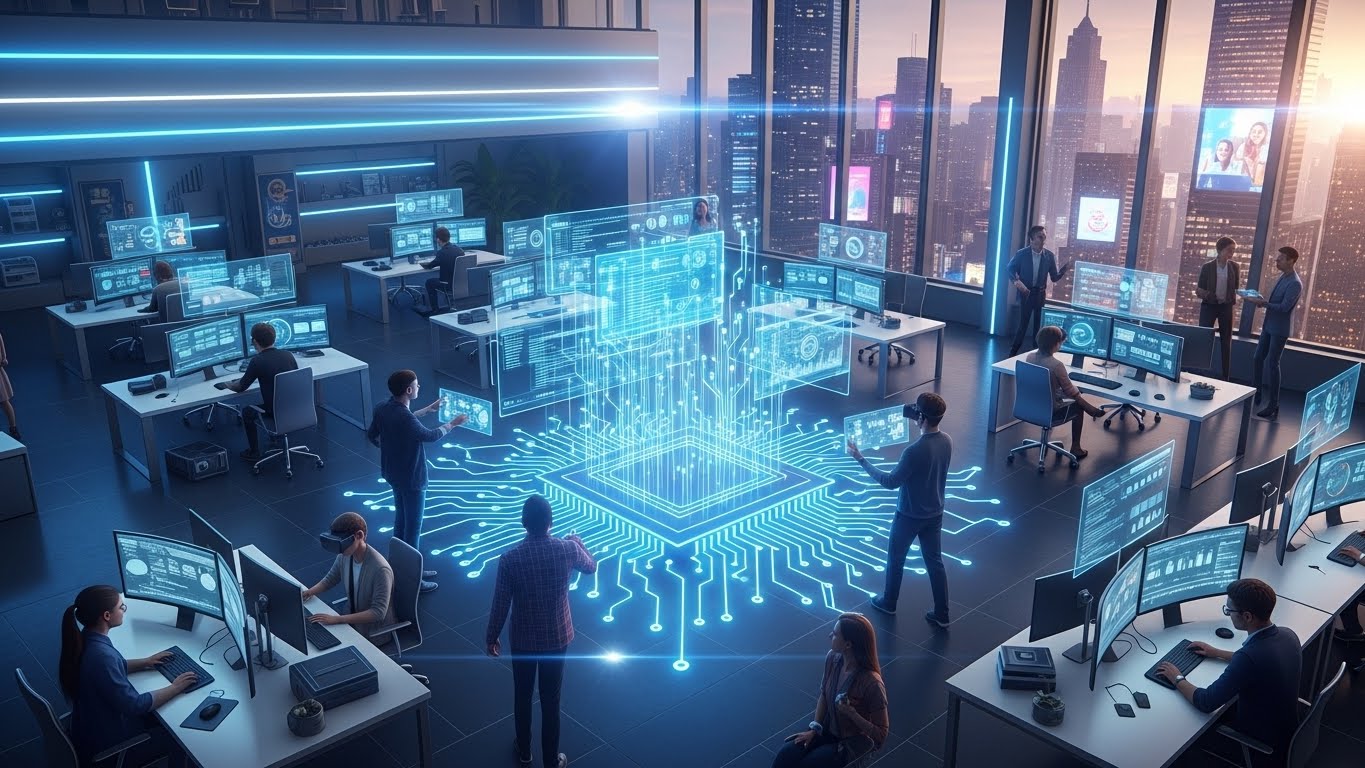

Introduction: The Ever-Accelerating Pace of Technology
Technology is no longer a mere tool in our lives—it has become the very framework that shapes how we live, work, and interact. From the earliest computers to the era of artificial intelligence and quantum computing, the evolution of technology has been both rapid and transformative. Today, the digital landscape evolves at a pace that challenges industries, governments, and individuals to adapt continually. The consequences of this rapid innovation are profound, affecting communication, business, healthcare, education, and even the way humans think and interact.
The Foundation of Modern Technology: Computing and Connectivity
At the core of today’s technological revolution lies computing power and connectivity. Moore’s Law, which observed that the number of transistors on a microchip doubles approximately every two years, has enabled devices to become faster, smaller, and more energy-efficient. Alongside this, the proliferation of the internet and wireless networks has connected billions of people worldwide, making real-time communication and data sharing possible at an unprecedented scale. These two pillars—computing and connectivity—have laid the groundwork for innovations ranging from cloud computing to the Internet of Things.
Artificial Intelligence: Redefining Intelligence
Artificial intelligence (AI) is no longer confined to science fiction—it permeates many aspects of our daily lives. From virtual assistants and recommendation algorithms to autonomous vehicles and predictive analytics, AI has revolutionized decision-making processes. Machine learning allows systems to analyze vast datasets, detect patterns, and even anticipate future outcomes, providing solutions that were previously unimaginable. While AI brings immense efficiency and convenience, it also raises ethical considerations regarding privacy, bias, and the future of employment, challenging society to find a balance between innovation and responsibility.
The Rise of Smart Devices and the Internet of Things
The Internet of Things (IoT) represents the next frontier in connectivity. Everyday objects—from refrigerators and thermostats to wearable devices—are now embedded with sensors that collect and transmit data. Smart devices allow users to automate tasks, monitor health, and control environments with unparalleled ease. For example, wearable technology can track heart rates, sleep patterns, and physical activity, providing insights that can improve personal health and wellness. Meanwhile, smart cities use IoT to optimize traffic flow, reduce energy consumption, and improve public services, demonstrating how technology can enhance the quality of life on a societal level.
Blockchain and Decentralization: Trust in the Digital Era
Blockchain technology has introduced a new paradigm for trust and transparency in the digital world. By creating decentralized, immutable records, blockchain enables secure transactions without the need for intermediaries. While it is most famously associated with cryptocurrencies, the potential applications extend far beyond digital currency. Supply chain management, voting systems, digital identity verification, and intellectual property protection are all areas where blockchain can enhance security, accountability, and efficiency. The rise of decentralized technologies challenges traditional institutions and prompts us to reconsider how trust is established in the modern era.
Revolutionizing Healthcare Through Technology
The impact of technology on healthcare has been transformative. Telemedicine allows patients to consult with doctors remotely, breaking down geographical barriers and increasing accessibility. Advanced imaging, robotic surgery, and AI-driven diagnostics have improved the accuracy of medical procedures and enabled personalized treatments. Additionally, wearable devices and mobile apps help individuals monitor chronic conditions and maintain healthier lifestyles. Technology has also accelerated research, enabling rapid vaccine development and global collaboration, as evidenced during recent health crises. The convergence of digital tools and healthcare promises to extend life expectancy, enhance quality of care, and make medical services more equitable worldwide.
Education and the Digital Classroom
Technology has reshaped education, breaking free from the constraints of physical classrooms. Online learning platforms, interactive software, and virtual reality simulations offer students personalized and engaging learning experiences. AI-driven analytics can track individual progress, identify areas for improvement, and tailor content accordingly. Virtual classrooms have also made education more accessible to remote and underserved populations, bridging gaps that once seemed insurmountable. As digital literacy becomes increasingly essential, technology is not only transforming what students learn but also how they learn, preparing them for a rapidly evolving world.
The Future of Work: Automation and Collaboration
The workplace is undergoing a fundamental transformation driven by technology. Automation, robotics, and AI-powered tools are reshaping tasks that were once the exclusive domain of humans. Repetitive and mundane activities are increasingly handled by machines, freeing human workers to focus on creativity, problem-solving, and strategic thinking. Collaboration tools and cloud platforms enable global teams to work seamlessly across time zones, enhancing productivity and innovation. However, this transformation also demands reskilling and adaptability, as workers must navigate an evolving landscape where technological proficiency is no longer optional but essential.
Entertainment and Immersive Experiences
Technology has revolutionized how we experience entertainment. Streaming services, augmented reality, virtual reality, and interactive media offer immersive experiences that blur the line between reality and digital fiction. Gaming, in particular, has evolved into a multi-billion-dollar industry, with virtual worlds that allow players to interact, create, and explore complex narratives. Beyond recreation, these immersive technologies are finding applications in training, education, and therapy, demonstrating how entertainment and functionality can converge to create meaningful experiences.
Ethics, Privacy, and Security in a Digital World
As technology advances, ethical considerations become increasingly critical. Data privacy, cybersecurity, and the responsible use of AI are pressing concerns in a connected world. Organizations and individuals must navigate a complex landscape where sensitive information is constantly at risk of exposure. Ethical frameworks, regulations, and technological safeguards are essential to ensure that innovation serves humanity without compromising safety, privacy, or fairness. The challenge is not only technical but philosophical, as society must define the boundaries of acceptable technological influence in daily life.
Sustainability and Technology
Technology also offers solutions to some of the most pressing environmental challenges. Renewable energy technologies, smart grids, and energy-efficient devices help reduce carbon footprints and mitigate climate change. AI and big data are applied to optimize resource management, predict environmental risks, and enhance conservation efforts. Sustainable technology practices are increasingly essential as the global population grows and demands on natural resources intensify. By integrating innovation with environmental responsibility, technology can play a pivotal role in shaping a sustainable future.
Conclusion: Embracing the Digital Renaissance
The technological revolution is more than a series of innovations—it represents a digital renaissance reshaping every aspect of human life. From AI and IoT to blockchain, healthcare, education, and sustainability, technology is not simply a tool but a transformative force. It empowers individuals, drives economic growth, and redefines societal structures. However, this transformation comes with responsibilities: ethical use, privacy protection, and equitable access must guide the evolution of technology. As we embrace this digital era, the potential for progress is limitless, promising a future where human ingenuity and technological advancement work hand in hand to create a better, more connected world.