Introduction
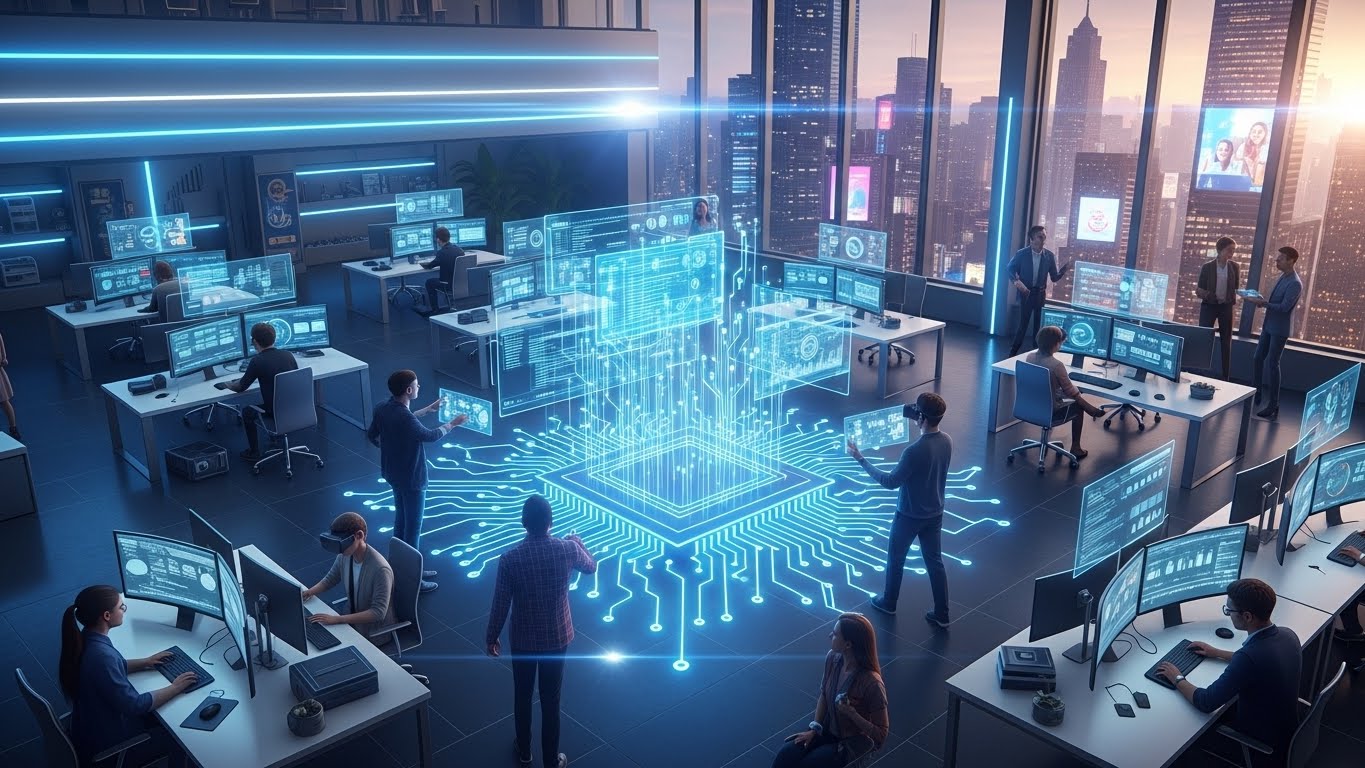
Technology has always been the driving force of human progress. From the invention of the wheel to the rise of artificial intelligence, every era has witnessed innovations that reshape how we live, work, and think. In today’s rapidly evolving world, the pace of technological change is faster than ever before. We stand on the edge of a digital frontier, where innovation is not just a part of life—it defines it. This blog explores the most transformative technologies of the modern age, their real-world impact, and the direction in which our digital future is headed.
The Era of Artificial Intelligence
Artificial Intelligence (AI) has moved from the realm of science fiction to an everyday reality. It powers the voice assistants in our homes, the recommendation engines on our devices, and even the systems that drive autonomous vehicles. AI’s ability to learn, adapt, and make decisions is transforming industries across the globe.
In healthcare, AI algorithms are diagnosing diseases faster and more accurately than ever before. In finance, machine learning models predict market trends and manage risk with astonishing precision. In education, AI tools personalize learning experiences for students, making knowledge more accessible to all. However, this rapid adoption of AI also raises ethical questions about privacy, job displacement, and data ownership. Striking a balance between innovation and responsibility is essential for AI’s sustainable growth.
The Rise of Quantum Computing
Quantum computing is another revolutionary force poised to change the technological landscape. Traditional computers process data in binary bits—either 0 or 1—but quantum computers use qubits, which can represent both 0 and 1 simultaneously. This gives them immense computational power, enabling them to solve problems that would take classical computers centuries to complete.
Quantum computing has potential applications in cryptography, material science, pharmaceuticals, and climate modeling. For example, it could help design new medicines by simulating molecular interactions at an atomic level. Though still in its early stages, quantum computing represents a future where processing limitations may become a thing of the past.
The Expanding World of the Internet of Things
The Internet of Things (IoT) has quietly woven itself into the fabric of our daily lives. Smart homes, wearable fitness devices, connected vehicles, and industrial sensors all form part of a vast IoT network that collects and exchanges data in real time.
IoT brings convenience and efficiency, allowing users to control their environment with a simple voice command or tap of a screen. On a larger scale, IoT systems are revolutionizing agriculture, logistics, and urban planning. Smart cities use interconnected devices to monitor traffic flow, reduce energy consumption, and enhance public safety.
Yet, as our dependence on IoT grows, so does the importance of cybersecurity. Protecting billions of connected devices from cyberattacks is one of the biggest challenges facing this interconnected world.
The Evolution of 5G Connectivity
Communication technology has always played a vital role in technological progress. The rollout of 5G networks marks a new era of connectivity, promising faster speeds, lower latency, and more reliable connections. This leap in wireless technology enables real-time communication on a scale never seen before.
5G is more than just faster internet—it is the foundation for next-generation innovations like smart transportation systems, augmented reality, and advanced robotics. In industries such as healthcare and manufacturing, 5G’s low latency enables remote surgeries and fully automated production lines. As 5G infrastructure expands globally, it will unlock new opportunities for innovation across all sectors.
The Power of Edge Computing
As the volume of data generated by connected devices continues to soar, traditional cloud computing models face limitations in speed and efficiency. This challenge has given rise to edge computing, a system that processes data closer to where it is generated rather than sending it to distant servers.
Edge computing reduces latency, improves data security, and enhances system performance. For example, in autonomous vehicles, edge computing allows for real-time decision-making critical for passenger safety. In industrial environments, it helps optimize operations and minimize downtime. As IoT and 5G technologies continue to expand, edge computing will become an essential pillar of modern infrastructure.
The Integration of Augmented and Virtual Reality
Augmented Reality (AR) and Virtual Reality (VR) are transforming how we experience the digital world. AR overlays digital information onto the real world, while VR immerses users entirely within a virtual environment. Together, they form a bridge between physical and digital realities.
In the entertainment industry, VR is redefining gaming and storytelling. In education, AR brings complex concepts to life, allowing students to explore historical sites or dissect virtual organisms. In business, AR enhances training simulations and product design. The rise of the metaverse—a shared digital universe—further demonstrates how AR and VR could become integral to future communication, commerce, and creativity.
The Revolution of Blockchain Technology
Blockchain, the technology behind cryptocurrencies, extends far beyond digital currencies. At its core, blockchain is a decentralized ledger that records transactions securely and transparently. Its potential applications span finance, supply chain management, healthcare, and even governance.
By eliminating intermediaries and ensuring data integrity, blockchain promotes trust and efficiency. In supply chains, it provides end-to-end visibility, reducing fraud and improving accountability. In healthcare, it ensures patient data security and interoperability between systems. Governments are also exploring blockchain for secure voting systems and digital identity verification.
The Green Technology Movement
As technology advances, so too must our commitment to sustainability. Green technology, or cleantech, focuses on creating solutions that minimize environmental impact. Innovations in renewable energy, electric vehicles, and sustainable manufacturing are at the heart of this movement.
Solar and wind power are becoming more efficient and affordable, while battery technologies are improving energy storage capacity. Smart grids manage energy distribution more effectively, reducing waste and promoting renewable integration. Technology is no longer just about convenience—it is about building a future that supports both progress and the planet.
The Future of Robotics and Automation
Robotics and automation are redefining productivity across industries. From manufacturing to healthcare, robots are performing tasks with precision, consistency, and speed. In logistics, automated warehouses streamline operations. In healthcare, robotic surgeons perform delicate procedures with unmatched accuracy.
As robots become more intelligent and adaptable, they are moving beyond repetitive tasks to roles requiring perception and decision-making. This shift raises important questions about the future of work. While automation may replace certain jobs, it also creates new opportunities in robotics engineering, data analysis, and system management. The challenge lies in preparing the workforce for this transformation through education and skill development.
Cybersecurity in a Connected World
With the rise of digital technologies comes an equally strong rise in cyber threats. Cybersecurity has become one of the most critical aspects of modern life. From personal data breaches to national infrastructure attacks, cybercrime poses serious risks.
Organizations must adopt proactive defense mechanisms, including encryption, multi-factor authentication, and AI-driven threat detection. Equally important is educating individuals about digital safety practices. In the interconnected era, cybersecurity is not just a technical necessity—it is a collective responsibility.
Human and Machine Collaboration
Rather than replacing humans, technology is increasingly seen as a partner that enhances human capabilities. Collaborative robots, AI-driven assistants, and intelligent software systems are designed to work alongside people, increasing efficiency and creativity.
For example, AI helps scientists analyze massive datasets in research, while automation assists artists in bringing creative ideas to life. The goal of future innovation is not to eliminate the human element but to empower it. The integration of human intelligence and machine efficiency marks a new chapter in technological evolution.
The Ethical Dimension of Technology
With great power comes great responsibility. The ethical implications of emerging technologies are as important as the technologies themselves. Issues like data privacy, digital surveillance, algorithmic bias, and environmental impact must be addressed with foresight and fairness.
Ethical technology design ensures that innovation benefits all of humanity, not just a select few. Policymakers, technologists, and global citizens must work together to establish standards that protect rights while encouraging creativity and progress.
Conclusion: Embracing the Future
The future of technology is a story still being written. Every innovation brings new opportunities—and new challenges. What defines the next era will not be the machines we build, but how we use them. From AI to quantum computing, from green energy to ethical design, the path forward is one of collaboration, consciousness, and courage.
As we stand on the threshold of the digital frontier, one truth remains clear: technology is not just shaping our future—it is our future. The choices we make today will determine how that future unfolds. By embracing innovation responsibly, we can ensure that technology continues to serve humanity, inspire progress, and build a world where possibility knows no bounds.