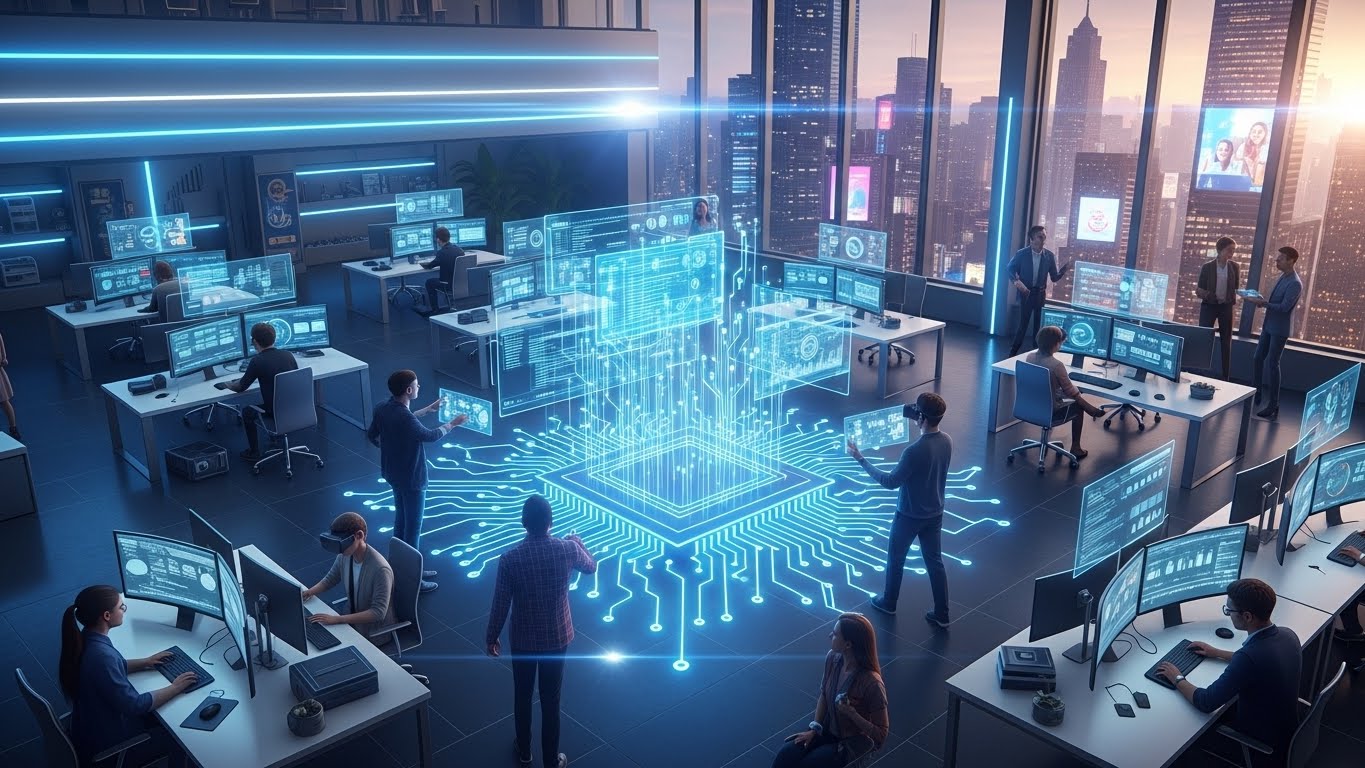
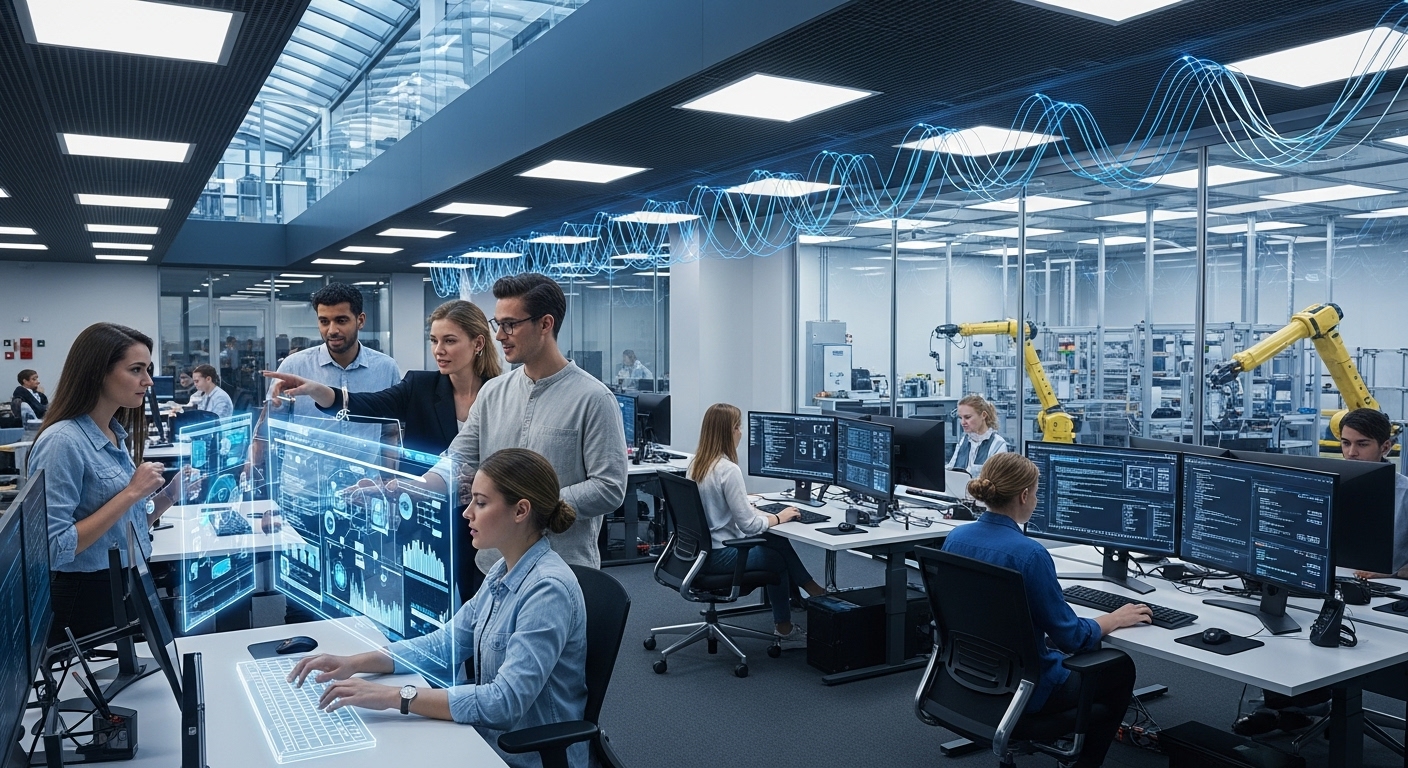
We are living in an era where technology is not just an accessory of daily life, but the very fabric that is weaving the future. From artificial intelligence to the proliferation of the Internet of Things (IoT), technology is rapidly changing how we work, live, and interact with the world. With each breakthrough, new opportunities arise, but so do challenges. This digital renaissance is not only transforming industries but also pushing the boundaries of what we thought was possible. As we stand at the threshold of a new era, it’s essential to understand how these advancements are shaping the world of tomorrow.
The Age of Artificial Intelligence: Redefining Human Potential
Artificial Intelligence (AI) is perhaps the most talked-about technology in recent years. From self-driving cars to chatbots and virtual assistants, AI is reshaping industries and the way we think about work and productivity. At its core, AI involves machines designed to perform tasks that typically require human intelligence. These tasks include learning from experience, recognizing patterns, understanding natural language, and making decisions.
In the past, tasks like these were limited to humans, but with AI, machines are now capable of doing them at a scale and speed that far surpasses human ability. AI has already made its mark in sectors like healthcare, where it is used for early diagnosis of diseases, drug discovery, and personalized treatments. In finance, AI is helping detect fraud and automate trading. And in customer service, AI-powered chatbots provide instant support to millions of people every day.
But the potential of AI goes beyond just automation. AI is creating new opportunities for collaboration between humans and machines. By offloading repetitive and time-consuming tasks to machines, humans can focus on creative and strategic endeavors. As AI continues to evolve, its impact on our society will only grow, raising questions about ethics, job displacement, and the role of human workers in the future economy.
The Rise of Autonomous Systems: Driving the Future of Transportation
One of the most promising applications of technology is in the realm of autonomous systems. These systems, from self-driving cars to unmanned drones, are set to revolutionize the way we think about transportation. Autonomous vehicles (AVs) are already in development by companies like Tesla, Waymo, and Uber, and they are expected to significantly reduce traffic accidents caused by human error.
The promise of self-driving cars is not just about convenience but also about improving safety and reducing emissions. AVs are equipped with sensors, cameras, and AI algorithms that allow them to navigate and make decisions in real time, potentially reducing traffic congestion and lowering carbon footprints. This technology could lead to a future where transportation is more efficient, less polluting, and more accessible.
However, the adoption of autonomous systems comes with challenges. Legal and ethical questions arise around liability in the event of an accident, the security of autonomous vehicles against cyberattacks, and the potential impact on jobs in the transportation sector. Despite these challenges, the development of autonomous systems is a clear sign that the future of transportation will be smart, sustainable, and more interconnected than ever before.
The Internet of Things: Building a Smarter, More Connected World
The Internet of Things (IoT) refers to the network of physical devices that are connected to the internet, enabling them to communicate and exchange data. This technology is already beginning to transform everyday objects—from refrigerators that monitor food inventory to thermostats that adjust based on weather patterns. The promise of IoT is a world where devices, systems, and appliances are interconnected, creating a seamless and efficient experience for users.
Smart homes are one of the most visible manifestations of IoT. Devices like smart speakers, security cameras, and lighting systems are all part of this interconnected ecosystem. These devices can be controlled remotely through smartphones or voice commands, offering greater convenience, security, and energy efficiency. But the potential of IoT extends far beyond the home.
In cities, IoT can help manage traffic, monitor air quality, and optimize energy usage in real-time. For businesses, IoT offers insights into consumer behavior, operational efficiency, and predictive maintenance of equipment. The data generated by IoT devices can be analyzed to make smarter decisions, reduce costs, and improve service delivery. As the IoT ecosystem grows, the way we live and work will become increasingly digital, connected, and optimized for efficiency.
5G Connectivity: A Leap into the Future of Communication
As the world becomes more connected, the need for faster and more reliable communication networks becomes more apparent. This is where 5G comes in. The fifth generation of wireless technology, 5G, promises faster speeds, lower latency, and the ability to connect more devices simultaneously. While 4G brought us mobile broadband and the ability to stream videos and play games on the go, 5G will unlock new possibilities, particularly in areas like virtual reality (VR), augmented reality (AR), and the expansion of the IoT.
5G’s ultra-low latency will enable real-time communication, making it possible for autonomous vehicles to respond to road conditions in milliseconds. It will also enable breakthroughs in telemedicine, allowing doctors to perform surgeries remotely with the help of robotic systems. For businesses, 5G will enable faster cloud computing, more efficient remote work, and the ability to handle large volumes of data with minimal delay.
As 5G networks are rolled out globally, we will see a new wave of innovation in everything from entertainment to healthcare, making our digital experiences faster, more immersive, and more reliable.
Blockchain Technology: Securing the Future of Digital Transactions
Blockchain technology has garnered a lot of attention due to its association with cryptocurrencies like Bitcoin. But its potential goes far beyond digital currencies. Blockchain is a decentralized, distributed ledger that securely records transactions across a network of computers. This technology has the power to revolutionize industries such as finance, supply chain management, and healthcare by offering enhanced security, transparency, and efficiency.
One of the key benefits of blockchain is its ability to provide a tamper-proof record of transactions. Each block in the chain contains a list of transactions, and once data is added, it cannot be changed without altering every subsequent block, making it virtually impossible to tamper with. This makes blockchain ideal for applications where trust and transparency are essential, such as financial transactions, voting systems, and contracts.
In the supply chain, blockchain can help track the movement of goods from origin to destination, ensuring that products are authentic and have not been tampered with. In healthcare, it can be used to securely store patient records, allowing for seamless data sharing between providers while maintaining privacy. The potential applications of blockchain are vast, and as the technology matures, we are likely to see it integrated into more sectors.
The Ethical Implications of Technological Advancements
With all the promise that technology holds, it also brings with it significant ethical considerations. As AI, IoT, and blockchain technologies continue to evolve, questions about privacy, security, and equity come to the forefront. For example, the collection of personal data through IoT devices raises concerns about privacy and surveillance. Who owns the data generated by your smart home devices? How can we ensure that our personal information is kept secure in a world where cyberattacks are increasingly sophisticated?
Similarly, the rise of AI and automation brings up questions about job displacement. As machines take over routine tasks, many workers may find themselves out of a job. While new job opportunities will arise, there is a risk of widening the gap between those who have the skills to thrive in a digital economy and those who do not. Governments, businesses, and educational institutions must work together to ensure that workers are equipped with the skills needed to succeed in an increasingly automated world.
Conclusion: Embracing a Future Shaped by Technology
The future of technology is a landscape of limitless possibilities. From artificial intelligence to blockchain, the innovations we see today are just the beginning. However, as we embrace these advancements, we must also consider their ethical and societal implications. Technology is a powerful tool, but it is how we choose to use it that will ultimately define the future. By ensuring that technology is developed and used responsibly, we can create a world that is smarter, safer, and more connected.
As we look ahead, one thing is clear: the digital renaissance is here, and the technologies of tomorrow are poised to shape our world in ways we can only begin to imagine. With each breakthrough, we take one step closer to a future where technology and humanity coexist in harmony, creating a better world for generations to come.